
Today opened our eyes to humbling and educational experiences. From learning about the history of Minneapolis to hearing about the Minnesota Agricultural Rural Leadership (MARL) program and from experiencing a sacred moment in a local mosque to hearing about structural racism, Class 52 faced a somber day.
Mentoring and Growth Discussion
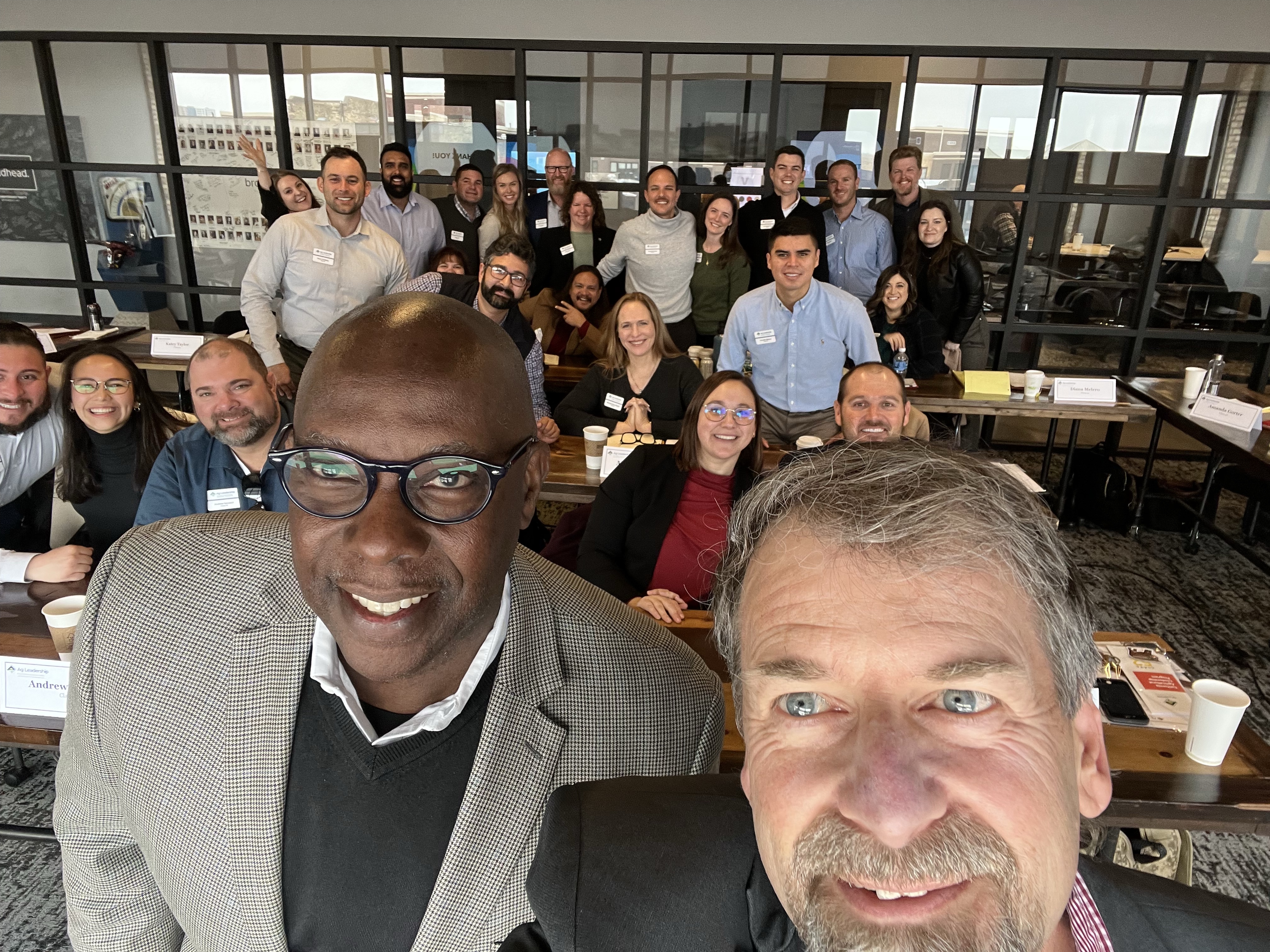
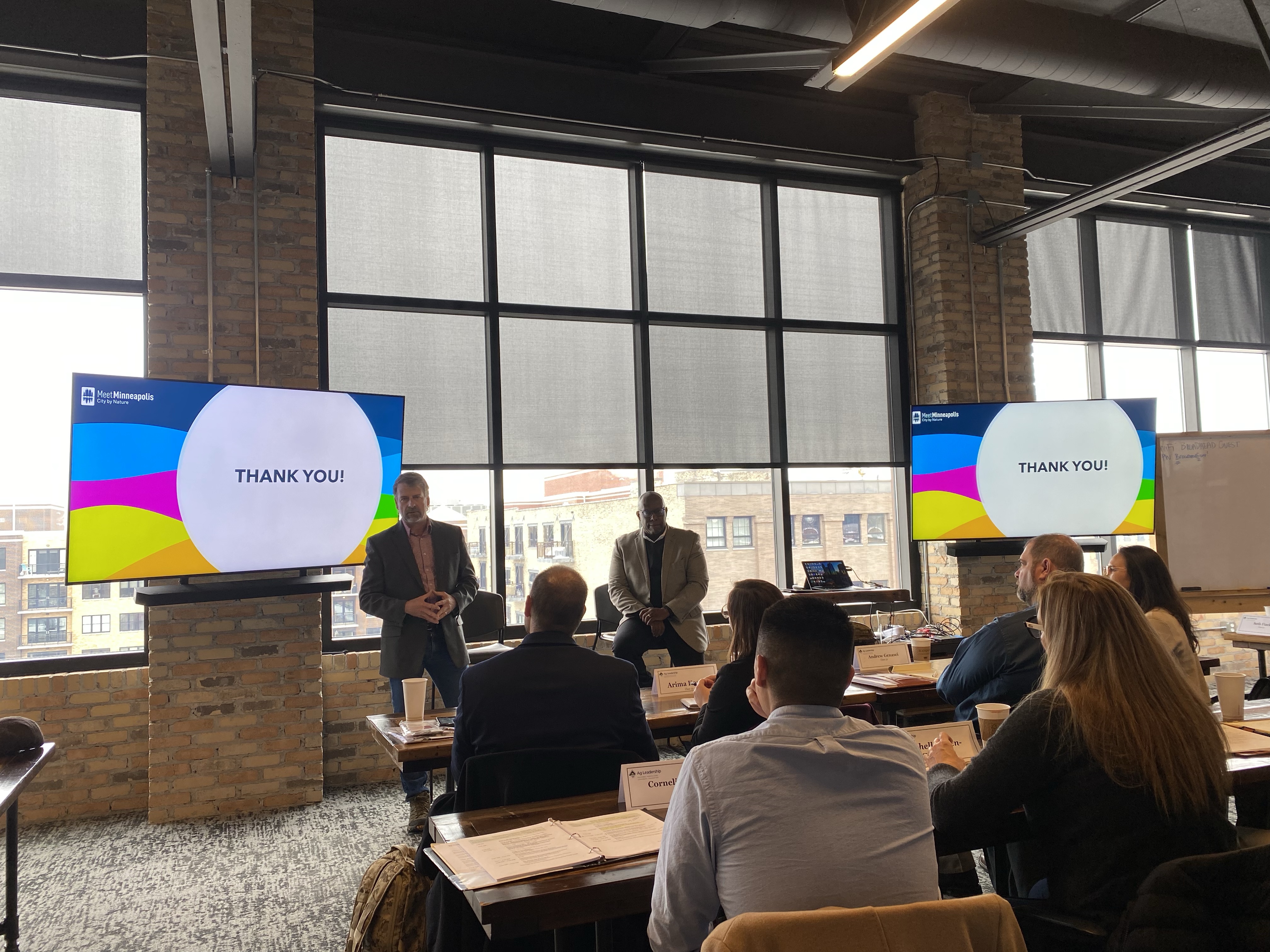
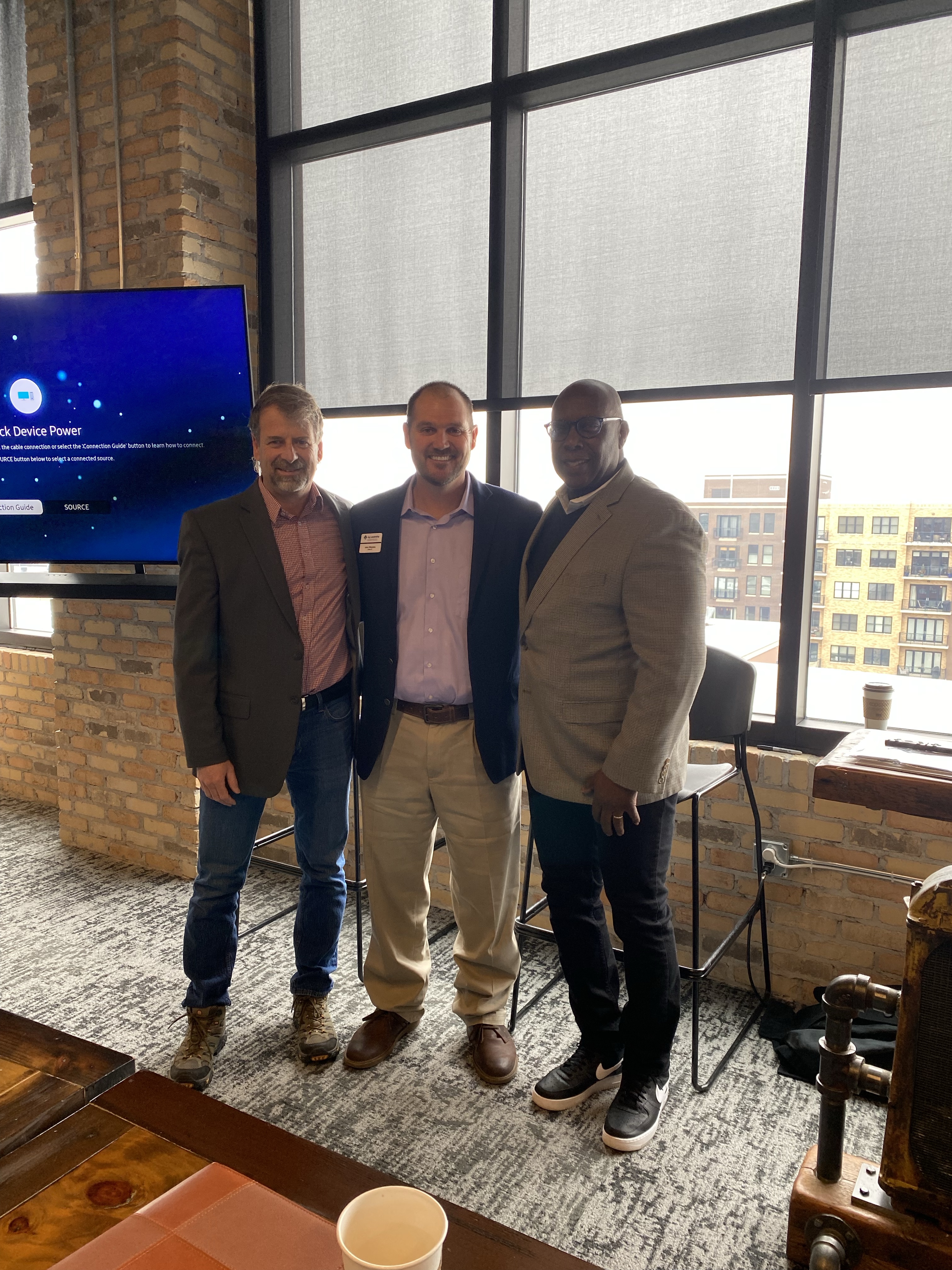
Our day started with an engaging conversation with Steve Olson and Melvin Tennant. Steve is the owner of Steve Olson Consulting, and Melvin is the Chief Executive Officer of Meet Minneapolis Convention and Visitors Association.
Steve spoke to the importance of both giving and receiving mentorship and remembering what it was about those mentors who have helped shape us along the way. We were reminded of the “Hero Exercise” (by Grace Flannery) from our inaugural seminar, in which we identified the qualities of our heroes and mentors. We ultimately realized those qualities were present in ourselves. Hearing Steve talk about the individuals who shaped us was a great way to bring that exercise full circle so many months later.
From the second portion of the presentation, Melvin spoke about his leadership challenges in attracting tourism and commerce to Minneapolis following the George Floyd incident; a tall order to fill. Among the number of strategies he employs, one really stood out. Melvin strives to show the world who Minneapolis is through telling its story, as opposed to telling the world what assets Minneapolis has. As Melvin stated, “Every city has a convention center, restaurants, tourism, etc.” However, acknowledging and embracing the past is first and foremost in telling our stories with bold authenticity and respect. Then, he highlighted successful changes to the broader Minneapolis culture to address the past, such as creating downtown cultural districts that highlight various ethnic and cultural groups and their contributions to the city.
The class learned a great leadership lesson and drew a parallel: it’s not always the leadership skills we possess (our assets) that set us apart. More importantly, it’s how we represent and display those assets to the outside world and the way we tell our leadership stories that set true leaders apart.
Dar Al-Hijrah Mosque Visit and Community Panel
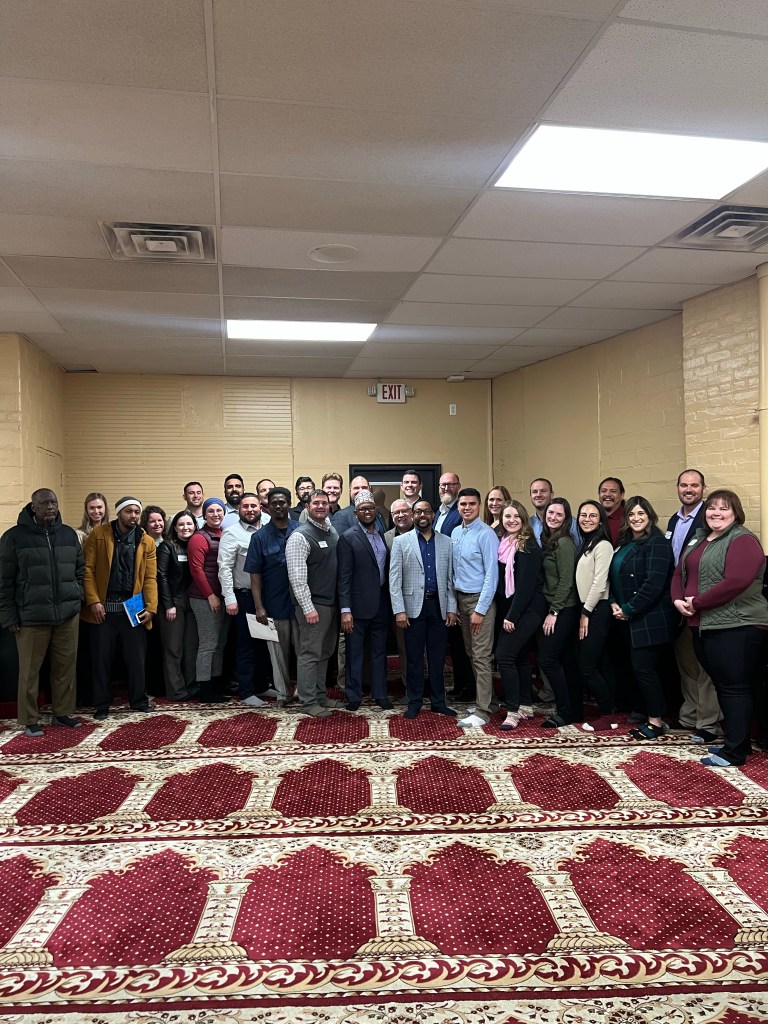
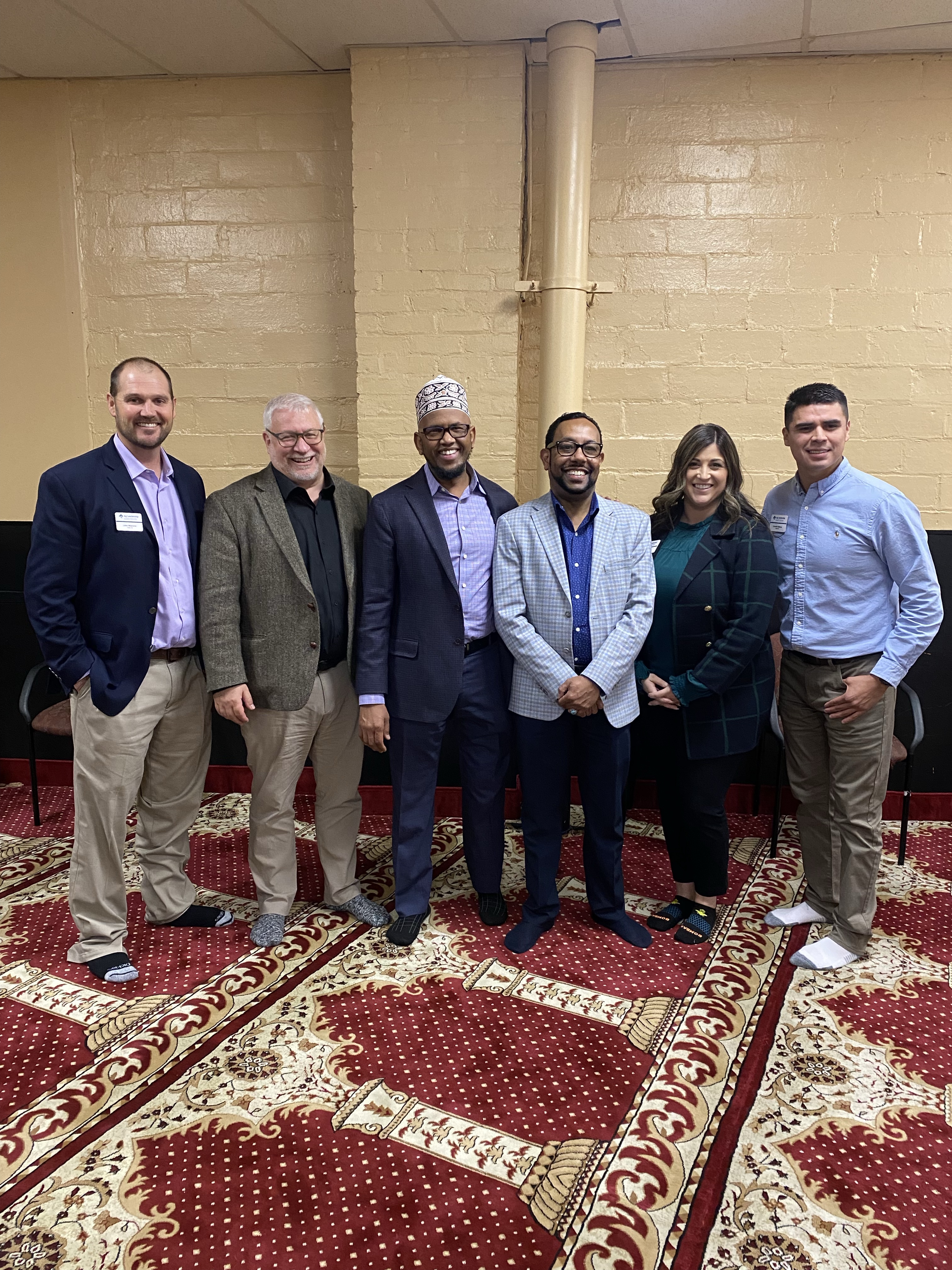
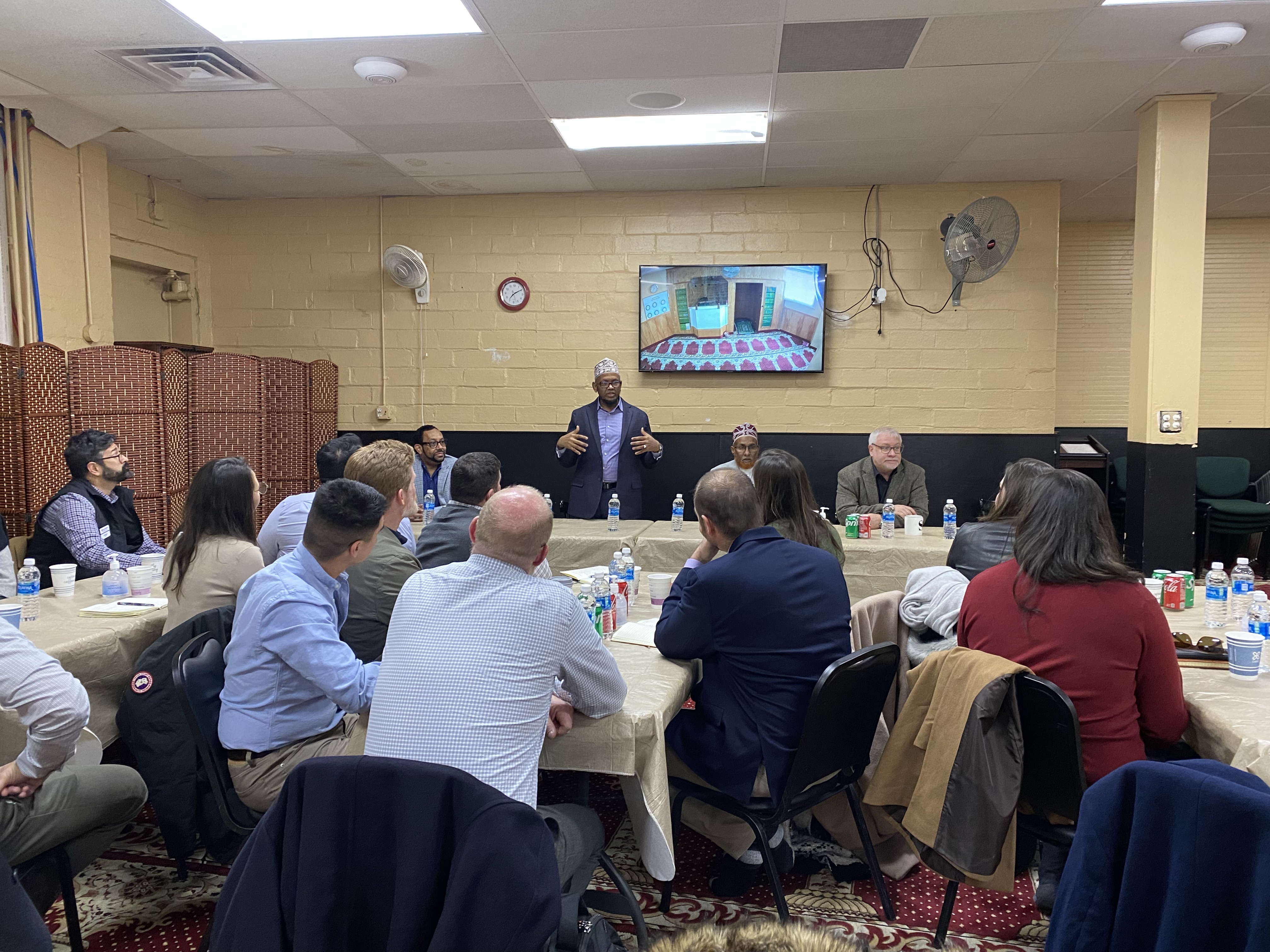
We had the opportunity to visit the oldest Somali mosque in the heart of Minneapolis, Dar Al-Hijrah. We had the honor to meet Imam Sharif Mohamed, Wali Dirie, and Dr. Michael Van Keulen. They each shared their Somali history, leadership journey, and engaged in a community panel.
One of the things that really stood out and left a lasting impression was upon our arrival. When we arrived at the mosque, we were prepared to greet them in their preferred fashion (placing one’s hand over the heart). To our surprise, we were often greeted in American fashion by our hosts (hand shake). We were honored by their willingness to adapt to our cultural norms, as we were prepared to do for theirs. It was great to see such cultural humility on both sides, a true leadership value. Dr. Keulen explained to us some of the social injustices present in Minnesota with respect to minority communities. As an example, Minnesota has a generally strong economy which is partly driven by immigrant and refugee labor. However, these refugees do not have as much access to education and other social services. As leaders and people with power, Dr. Keulen challenged us to think how we will use are positions to address our numerous leadership issues we face, including social injustice in our own community. As leaders we must also be willing to adapt and accept other cultures without being biased.
The Mapping Prejudice Project
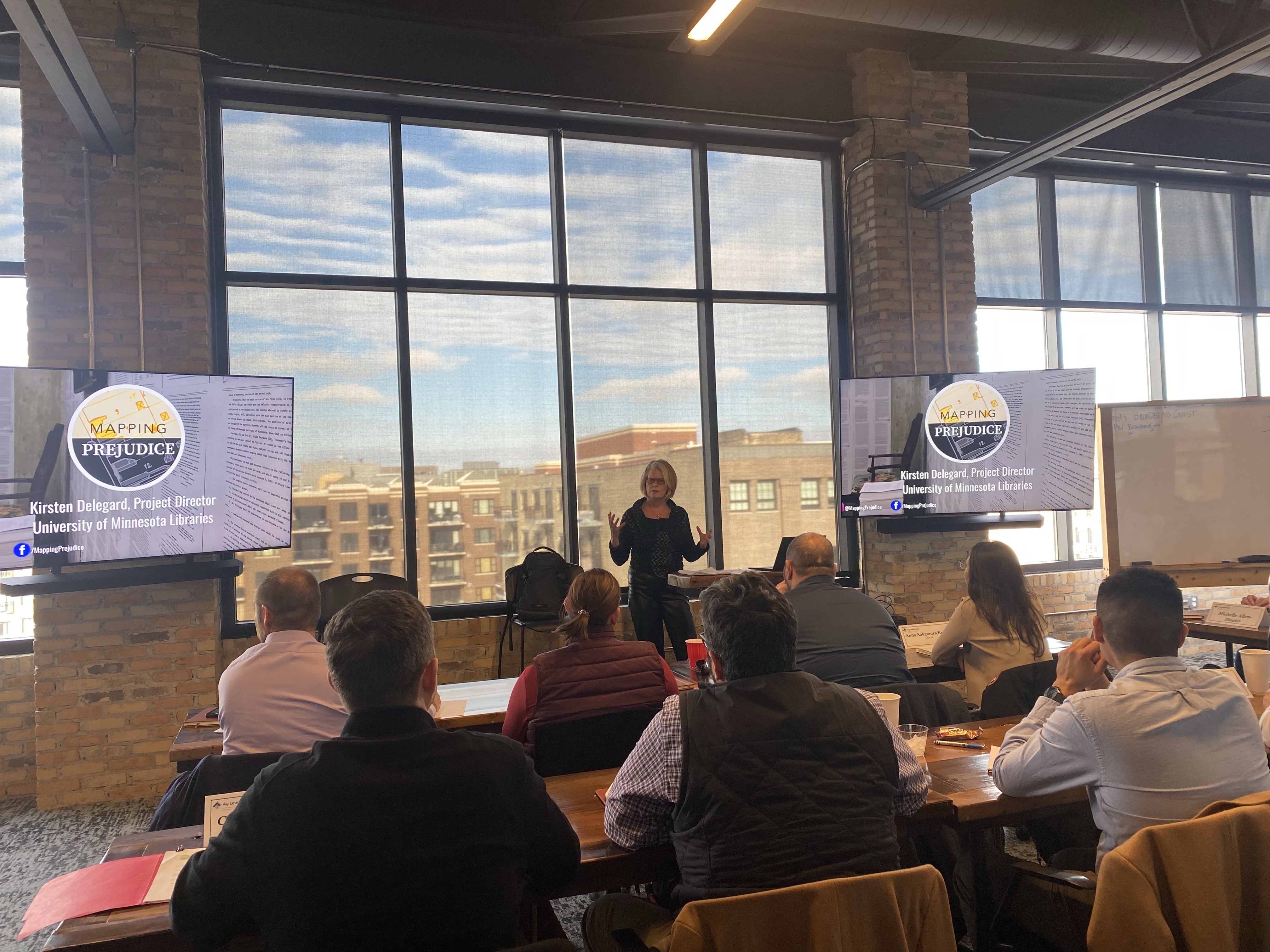
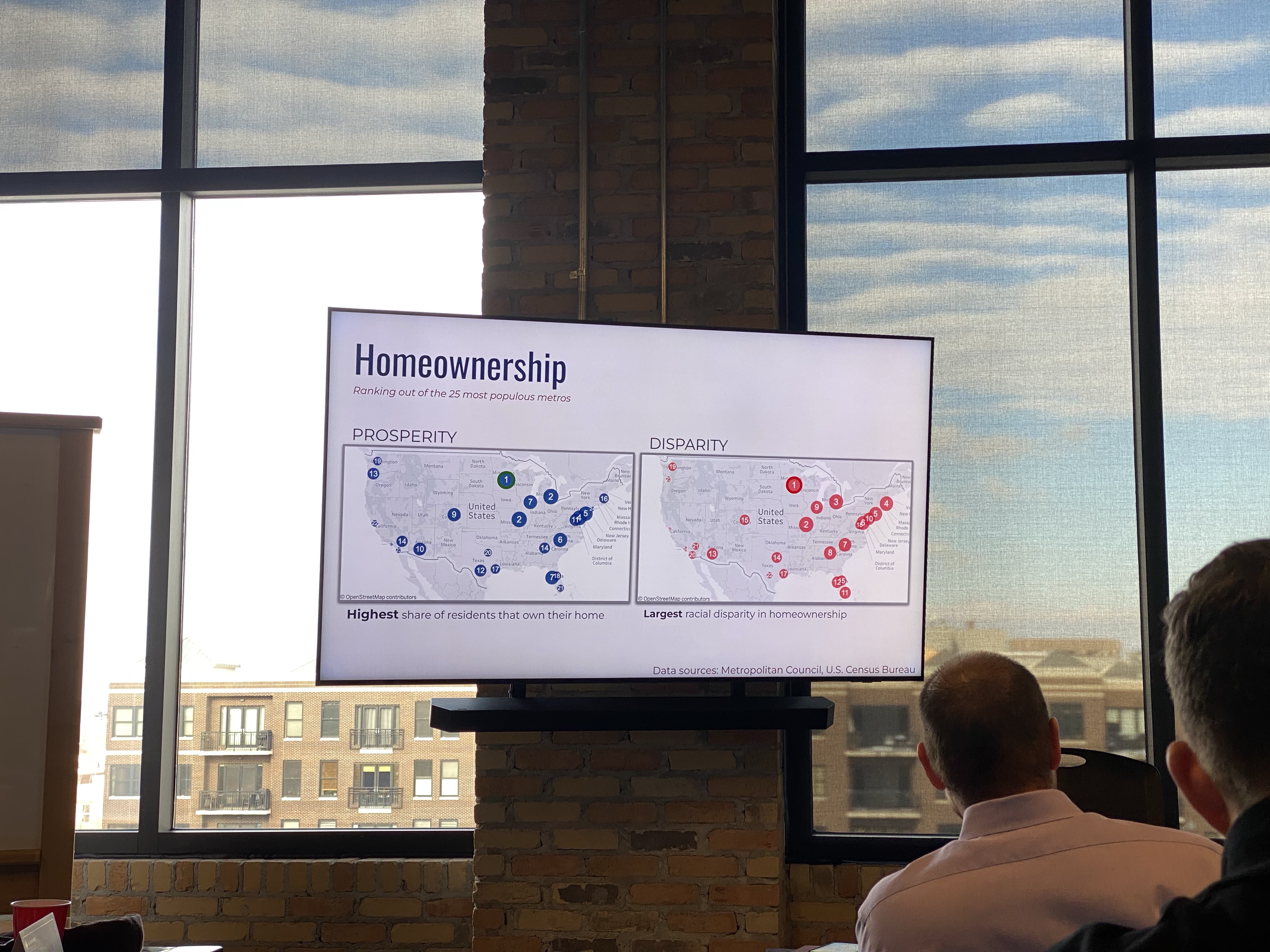
Class 52 ended the afternoon in Minneapolis hearing from Kristen Delegard, Project Manager of the award-winning Mapping Prejudice Project. Kristen presented an outline of the origin of her research project, which roots contemporary racial inequalities in the history of discriminatory housing practices.
The Mapping Prejudice mobilizes community members to recognize and map racial covenants. We learned that racial covenants are clauses embedded into property deeds to keep non-white people from buying or occupying homes in specific areas of a community.
Few of us had ever heard of this practice, but we shared that it is observable in our own communities when we really think about it. We also agreed that it is one of the more subtle forms of keeping people apart and preventing the sort of cultural vibrance that can really make our communities special.
Relating to our mosque experience, it was moving to us that throughout this experience, we ended up feeling so close. Although we share cultural differences, we realized we had more commonalities than differences. As an example, wanting a better life for current and future generations was a shared value for both of us.
Today we were challenged with different views and perspectives that made us uncomfortable at times. We were challenged to be open-minded and look at things from a different lens. We can all agree that history cannot be erased or amended, nor should it be. However, as leaders, we can embrace and learn from history. We can achieve this by encouraging open conversations on critical issues, creating safe spaces for dialogue, and bringing awareness to diverse points of view. This is how we can start making impactful change toward a better future.
Published by: Cornelio Blanco, Diana Melero & John Wiersma
 California Agricultural Leadership Program
Leave a comment