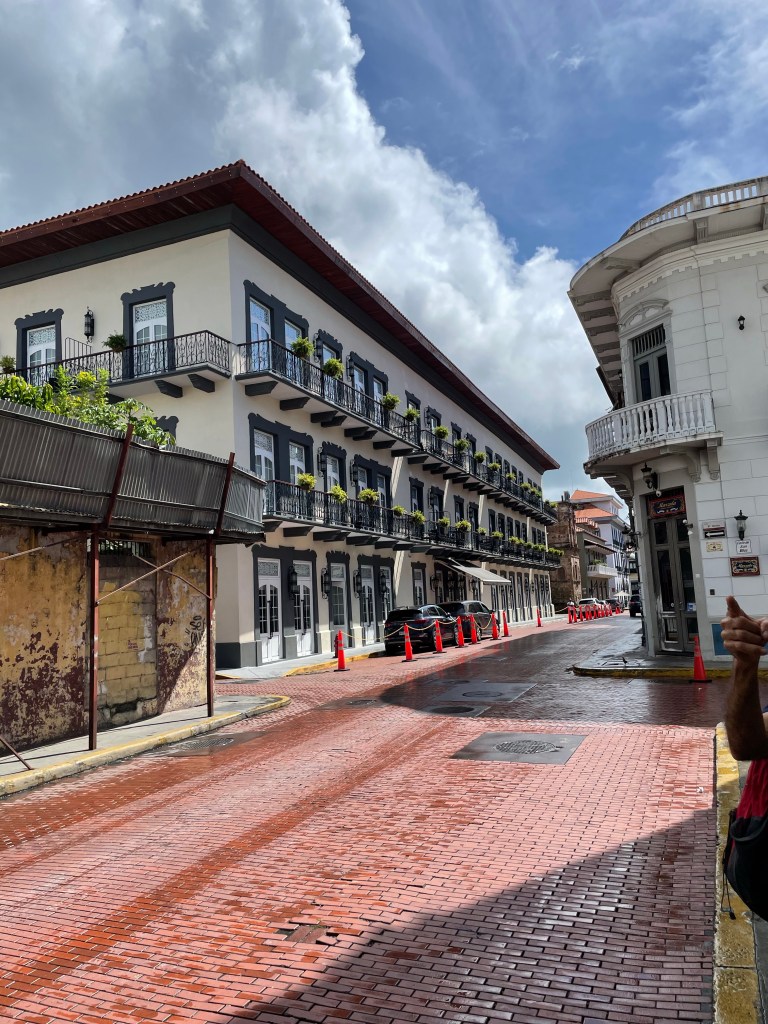
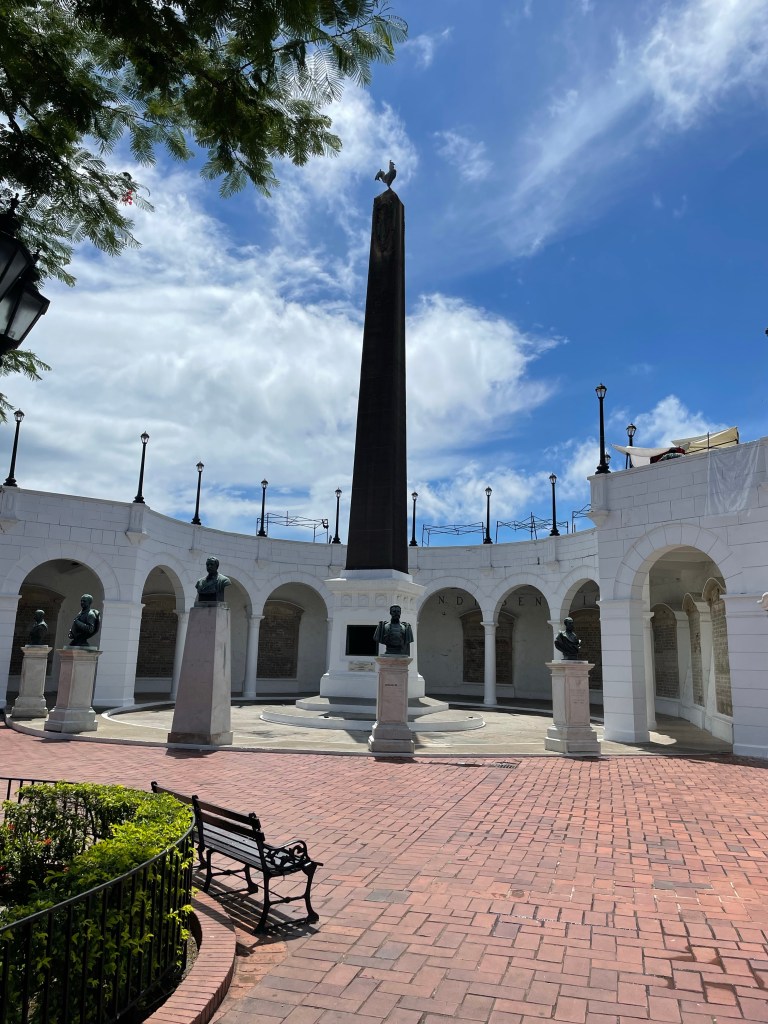
After a good nights rest and some time for self reflection, class 52 began day 2 of their international trip in Panama. Fellows boarded the bus, again led by local tour guide Ian Sanchez, and class 52 was off to Panama Viejo or Old Town. As class 52 pulled into Panama Viejo, we were met with a realization of disparity between the lower class of this area and middle – upper middle class. Compared to the beautiful high rises lining the Panama coast in Panama City, the entrance to Panama Viejo, first built in 1519, showed signs of building degradation and a lack of cleanliness. After exiting the bus, fellows followed guide Ian deeper into Panama Viejo entering Casco Viejo or Old Town Panama. Flashes of beauty began to appear with colorful buildings lining the brick paved streets, with flowers and plants showcasing beautiful balconies. The first stop for was at the Tigers Hand – a defensive V in the Old Town built in 1856 to provide strategic protection against forces looking to overtake Casco Viejo which was later deconstructed to help build the the new wall or Casco Viejo as the locals called the Old Shell that would safe guard the Old Town. Next, was the American Trade Hotel a 4 story structure considered the first high rise in Old town, and all of Panama. From there Class 52 stopped in at St. Joseph’s Church where they were introduced to the beautiful baroque style Golden Altar that is carved out of mahogany wood covered in a gold leaf. Then was a quick stop at Herrera Park, a tribute to Tomas Herrera who was a general that later became the head of statesmen in 1840 for the free state of Isthmus, a short lived independent state that was within the boundaries of what is now Panama. After a quick stop at a local art store Galeria de Indegina, we spent time at the French Plaza taking in the beauty of the multiple story Obelisk statue, gifted from the French to Panama in 1926. At the top of the obelisk are a pick and a shovel to recognize the workers and those who passed in the creation of the Panama Canal. From French Plaza we would journey back to the bus to begin the next leg of our Panamanian adventure.

Leaving Casco Viejo, we headed towards the Canal Zone and the causeway. We traveled through an older part of town with buildings, houses and apartments that were showing their years. Where families hang their laundry on their balcony and children smile and wave at our bus as we pass. Passing from the urban center of Old Town and into the greener areas of the former American Zone, we come face to face with the civil unrest that has been a constant part of our planning since we arrived here. We have truly learned to use the flexibility our Ed team told us to pack!
On Friday, Panama’s President, Laurentino Cortizo, approved a new contract with the Canadian company First Quantum Minerals for the operation of the Cobre Panama mine. This contract comes after the Supreme Court of Panama upheld a lower courts decision that the previous contract was unconstitutional in 2021. The new contract calls for $375 million each year — ten times more than previously — and allows First Quantum to operate in Panama for 20 years, renewable for another 20. The mine produces 300,000 tons of copper a year, generates about 8,000 direct jobs and 40,000 indirect ones, contributing 4 percent of the GDP and its shipments account for 75% of the country’s total exports.
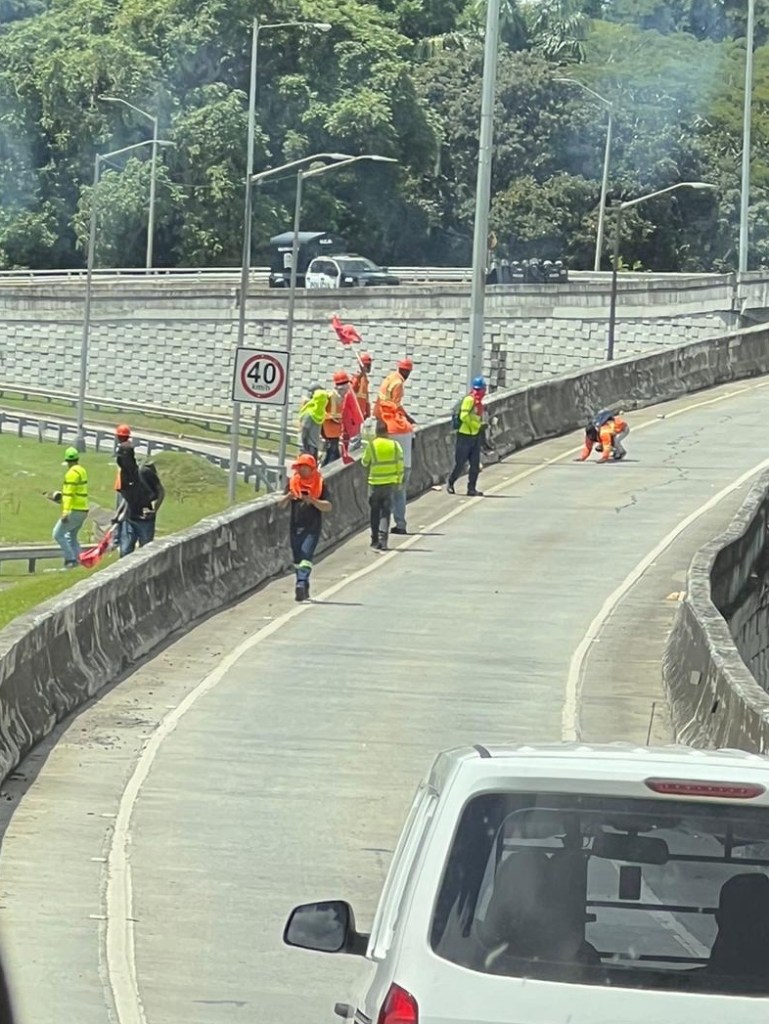
Since this new contract was ratified, protestors have taken to the streets in some areas and called for larger demonstrations around Panama City. Protestors feel that the contract surrenders National sovereignty and still doesn’t compensate the people of Panama enough for the environmental damage that the large open pit mine does. The Archbishop of Panama and several other Catholic bishops have expressed their rejection of the contract. Today, protestors have called for crowds to shut down travel through the main roadways around Panama City.
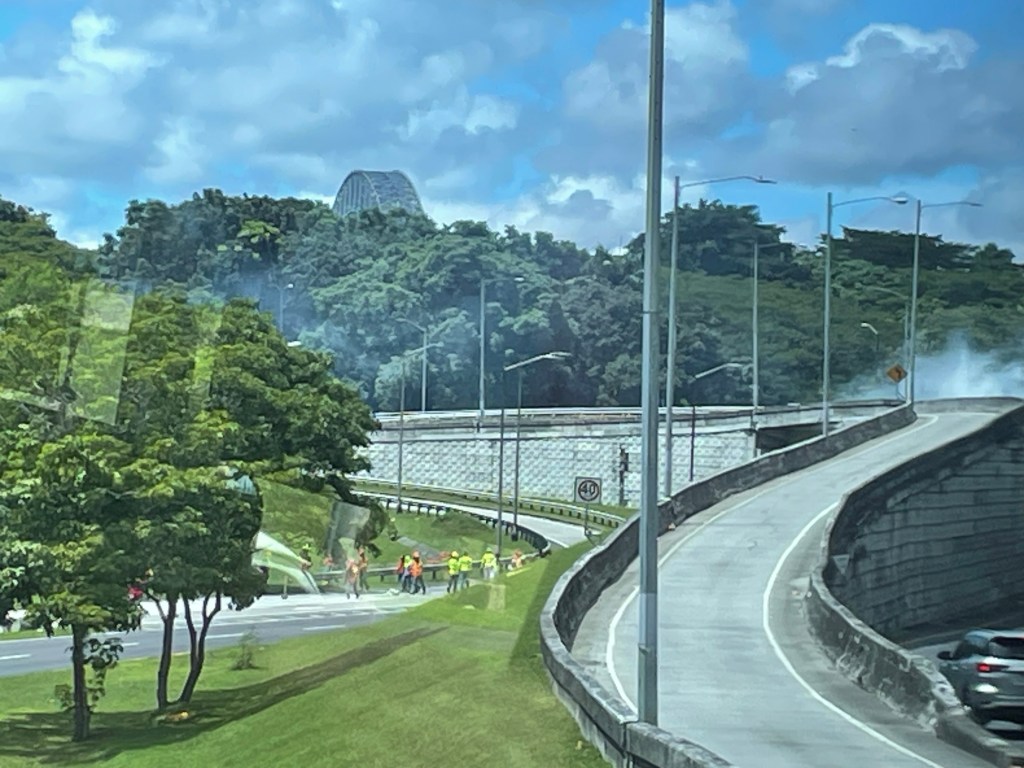
Rounding a corner, the already sparse traffic comes to a complete stop. We soon see why, as a cloud of tear gas rolls across the highway in the distance. A group of protesters, all wearing high visibility vests, are retreating towards our bus while a line of shielded riot police slowly advances. The nearly empty streets work in our favor as Miguel, our incredible bus driver, backs us quickly away from the skirmish. We watch as our guide and driver waste no time fretting. Their constant contact with authorities on the developing situation allowed them to quickly adapt to the reality in front of us, and we are soon onto another street through a former military base and back on schedule. It is a brief and superbly handled real world example of the crisis management that we have discussed many times as a class and we are grateful to have had such excellent models of how to handle hard things with sound thinking and decisive action.
Soon we arrived to view the Puente de la America (Bridge of the America’s) – connecting the two sides of the Panama Canal. Much like the physical bridge, we have just made another connection. The bridge is important link on the Pan-American Highway which leads from Alaska to Patagonia (with a break in the Darien Gap) We will connect more to the social and issues of the Darian Gap in Colombia.
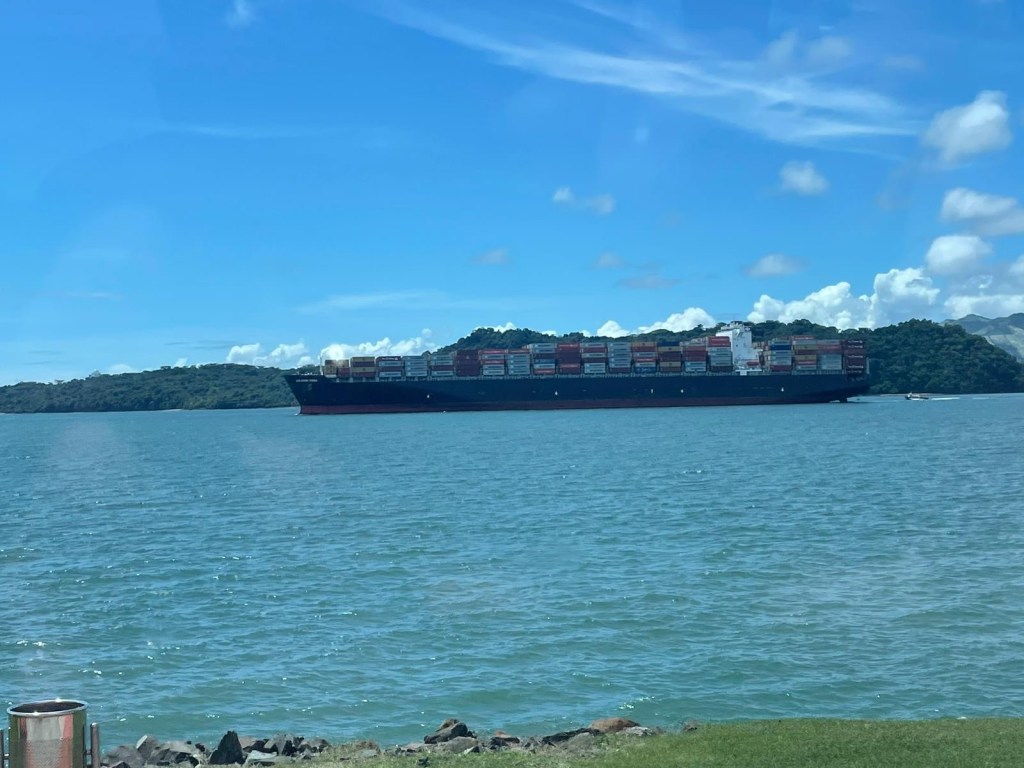
The view on the shore of the Amador Peninsula – created by the rock and earth from the construction of the canal, gave us glimpses of ships waiting to pass through the canal
We passed through Balboa, one of many small towns in the Canal Zone – which served as admin center and home of more than a dozen US military bases. These bases, until 1979 were solely a US Territory until the Panama Canal Treaties. The Panama Canal and all its assets and territories were fully returned (or reverted as our guide Ian better explained) back the Panamanian government on January 1, 2020.

Lunch was at the Tabarina de canal included Paella mar.
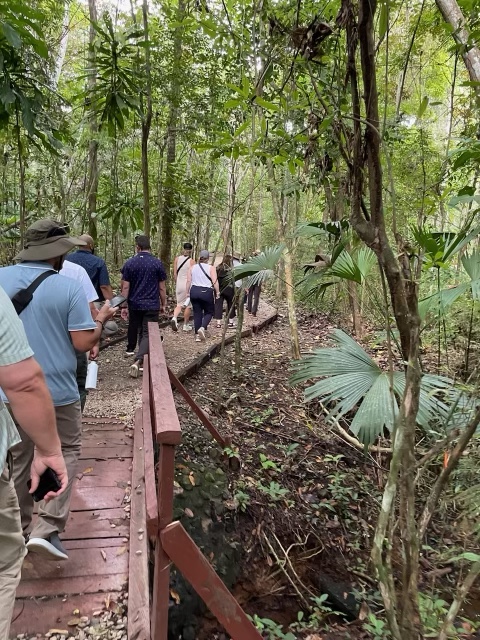
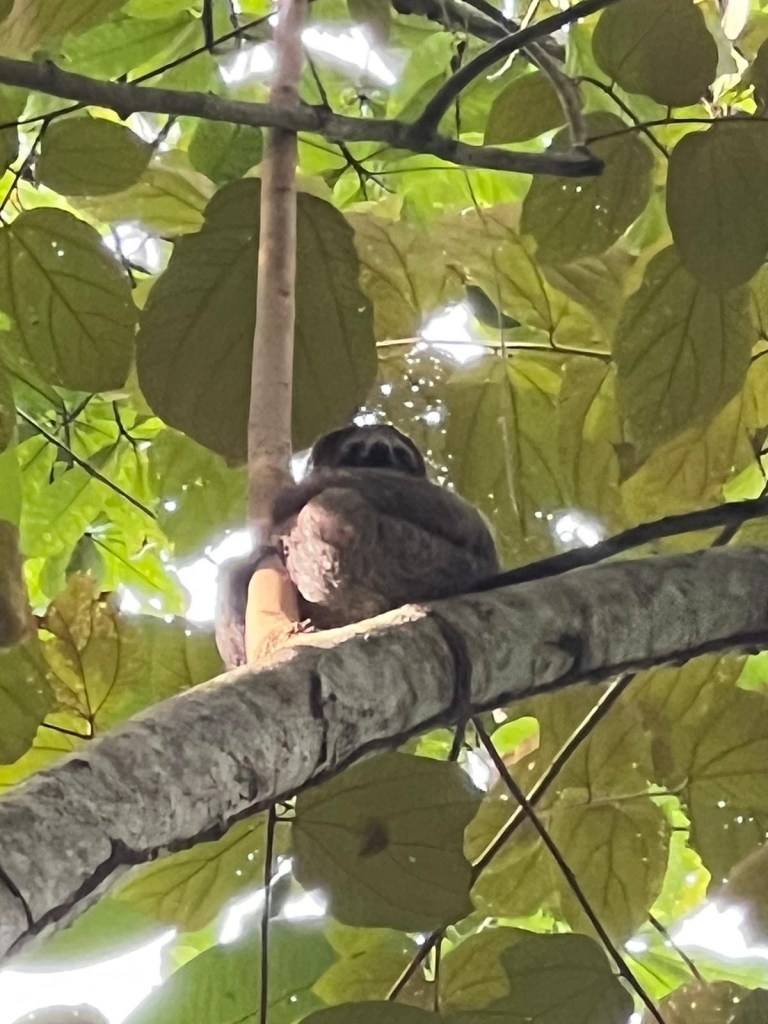
After lunch, it was a fast paced walk through a trail within the Parque Natural Metropolitano. Our guide Ian showered us with lessons on the rich biodiversity. Highlights included seeing the Toquilla palm – used to weave the signature Panamanian cream colored straw har, Heliconius flowers and a little sloth – high above us – one of many tree-dwelling mammals that rely on the health of tropical rainforests for food, shelter and space
The park – a native Tropical forest – a nature sanctuary, is just on the edge of town. Some describe it as the Lung of the Capital. A gigantic construction crane lies in the middle of the park, where global research scientists are studying the tropical forest from the upper canopy – a connection back to the states with research through the Smithsonian Tropical Research group.
Dinner was at Beirut Panama- a Lebanese restaurant. For those of us fortunate to sit by our guide Ian, over dinner, we were immersed in more stories of rich culture, history and clues connecting past to present- including the dictatorships, life experiences of the Panama side, American side, differing leadership styles and priorities.
As usual, the program challenged us with a full day of education and learning opportunities. Throughout the day, we were able to see and discuss the leadership challenges here in Panama. Panama is a vibrant country that has consistently been challenged and reborn, through fire, independence and the construction and eventual ownership of the canal. We are seeing first hand the tension of large decisions that pit the economy against the environment and the disparities found in a growing and rapidly modernizing, 500 year old city that has become a true crossroads of the world. Our chance to see constructive problem solving and crisis management on both the large and small scale in real time is something few get to experience and we will carry with us back to our families and careers! It is the kind of learning experience you cannot put a price tag on as we continue to grow.
Sean, Andrew and Katey
 California Agricultural Leadership Program
Leave a comment