

What is the “American” Dream? Is it achievable? What does it mean to be “American”? On our third day in Panama City we spent the day in the Bristol Hotel conference room learning about the mass human migration through the Darién Gap, the history of Panama and some of it’s leaders who dreamed dreams of the “American” continent. We discussed Agriculture imports and exports of Panama with the US Embassy’s USDA Foreign Ag Service. It was a day packed with emotion and thought-provoking questions that didn’t all have tidy, complete answers.
After a healthy breakfast at our hotel, we walked 100 feet in the morning humidity to the air-conditioned Bristol Hotel where we first met with Oliver Bush, Director of HIAS Panama. Oliver Bush has a career spanning 22 years working with displaced populations in the Middle East, Africa, Mexico, and now Panama where he has been since 2011 working with migrants passing through the Darién Gap. So far this year, there have been over 480,000 migrants, 20% of them children, from all over the world who have passed through the Darién jungle in search of a better life. HIAS’ mission is to provide vital services to refugees and asylum seekers around the world and advocates for their fundamental rights so they can rebuild their lives. We discussed the difference between a migrant and a refugee where refugees can not return to their country of origin due to political, social, economic, and even climatic reasons. If you were to wake up and your community was being bombed, and you needed to leave your house, what would you take? If you grab the essentials, only what you can wear and carry, and then you cross the border as a refugee, what do you do first? This is where HIAS comes in to help. They help find immediate shelter and then give refugees the tools to rebuild their lives and have a positive impact on their new community. Sometimes HIAS is able to work with receiving communities to organize and train refugees for skilled jobs that are needed in their new homes. We asked Oliver what it was like along the Darién and his emotions became visceral as he tried to explain the atrocities, including the brutal violence against women and children, that he has personally witnessed. He summed up his experience by saying, “Every time you help someone, you are doing a multiplication skill”. We understood his profound meaning as more than one fellow wiped their eyes.
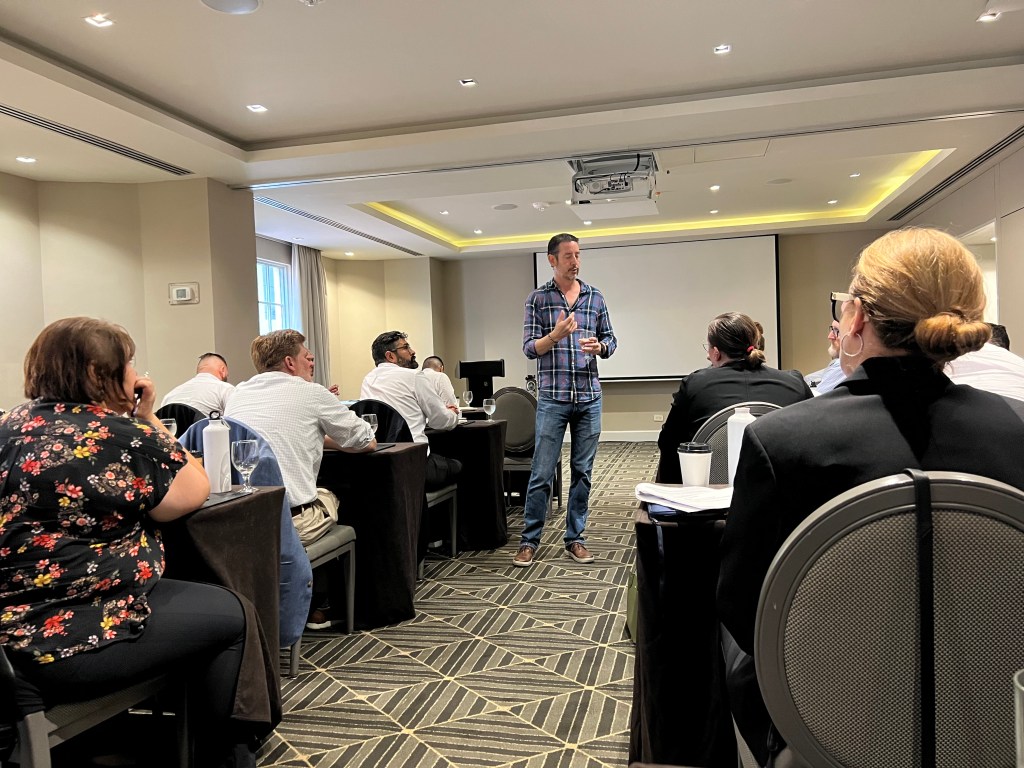
One classmate asked the question, “All these migrants coming north to seek the American Dream; do you think for them the American Dream is achievable anymore?” This led to questioning what the migrant dream is. Is it not true that their dream is for a better life than what they currently have? For opportunity? A chance for children to have a future better than their parents? The American Dream is a Dream for prosperity and opportunity in ALL AMERICA, North, South, and Central.
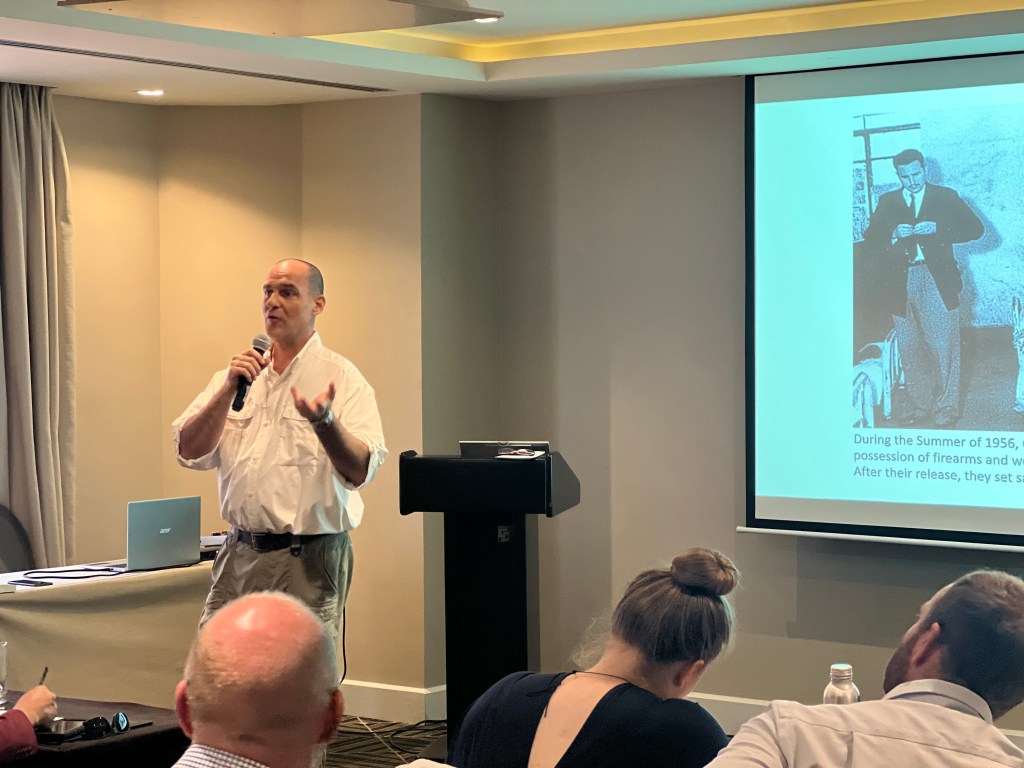
Our next guest was historian Patricio Roca who grew up in Panama and trained in the US Army before returning to Panama to do many things but eventually found his passion in teaching and lecturing on Panamanian history. He is a wealth of knowledge and seemed to know the history of any country discussed in Latin America (Napoleon III was first to use this name) and ALL of America. In his eyes, America truly meant both continents. Again, this brings new meaning to the “American” Dream making it less tangible in one location but more of a feeling or opportunity to search for across the whole North and South America.
Patricio Roca introduced us to leaders in Panama’s history who led the country in times of change. We learned of Omar Torrijos from Santiago, the same area where First Quantum of Canada is operating a large Copper mine and is a source of the current conflict in Panama City mentioned in the previous blog post. Omar Torrijos was beloved by many in rural Panama and was viewed as a man of the people. He was never officially president of Panama but took over the government in a military coup that left him in charge. He is known as an agent of change, bringing Agricultural reforms, electrification to the countryside, school, running water, and a social security system. And maybe most importantly, he negotiated with President Jimmy Carter to start the reversion of the Panama Canal to Panamanian control. Even though he loved by his people and is credited with positive social and economic reforms, the United States and other countries considered him a dictator based on his authoritarian rule of the country, suppression of opposition, and control of the military.
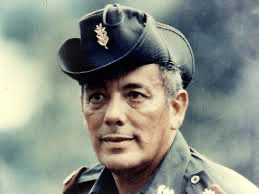
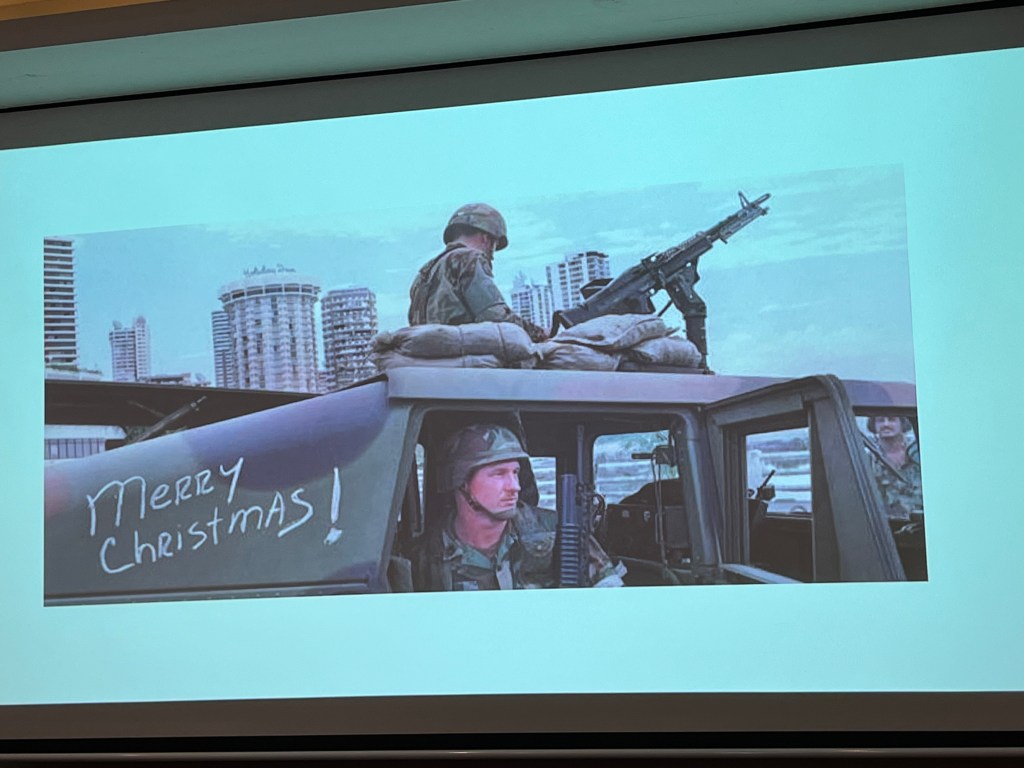
Omar Torrijos was killed in a suspicious plane accident and Manuel Noriega took over control of the country within a year using the same authoritarian rules as his predecessor. There may have been some corruption in the Torrijos regime but Manuel Noriega took it to new levels. While under Torrijos, Noriega was paid by the CIA to be an informant. He then took money from the drug cartels for intel on the United States. Playing both sides eventually found him in deep opposition to the US Government. In one speech he said “The US is keeping us in a state of war”. George H.W. Bush took this as a declaration of war and stated “Noriega declared a state of war with the US” and in December of 1989, operation Just Cause was used to capture and incarcerate Manuel Noriega and install Guillermo Endara as President-Elect. Endara had previously run against a pro-Noriega candidate for president and when polls showed Endara was well in the lead, Noriega cancelled the election. Noriega’s regime showed us how a leader under similar circumstances, can lead in very different ways and end with very different results.
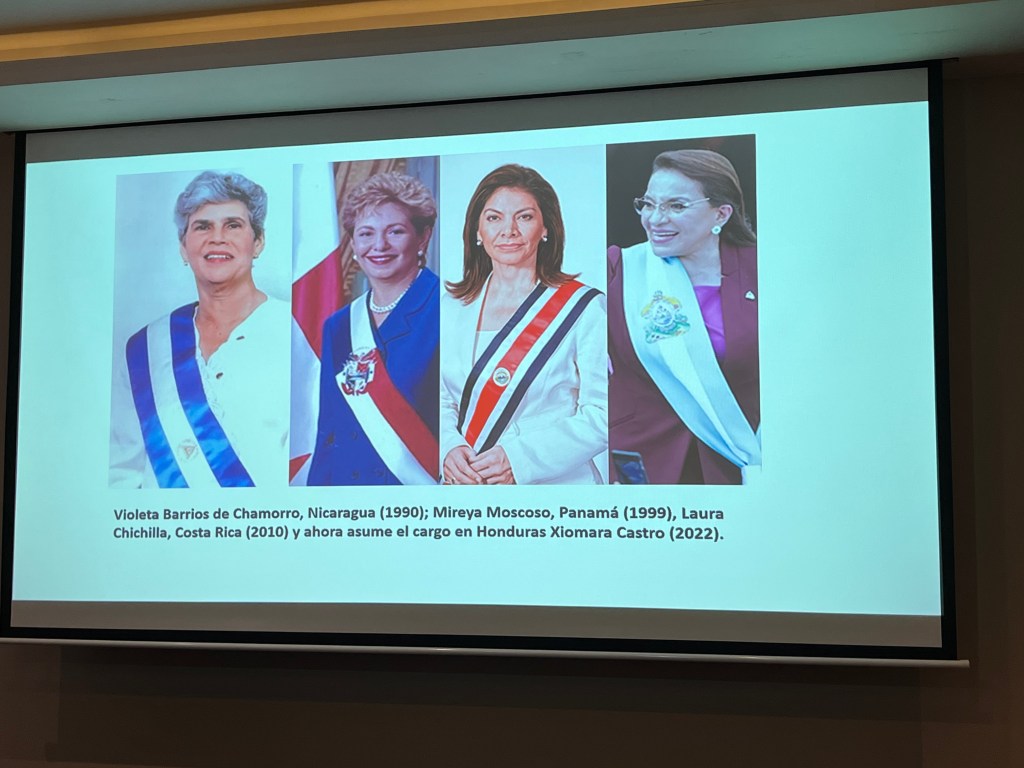
We also learned of Mireya Elisa Moscoso Rodriguez who was the wife of former president Arnufo Arias and creator of the Arnulfista or “Fufo” party. Arnufo Arias was removed from office in a coup and fled to Miami Florida where he and Mireya Moscoso lived until he passed away in 1988. Mireya moved back to Panama and eventually through the Fufo party in 1999 would became the first female president of Panama and the 2nd female president in America. She was able to complete the reversion of the Panama Canal to the Panamanian people during her presidency.
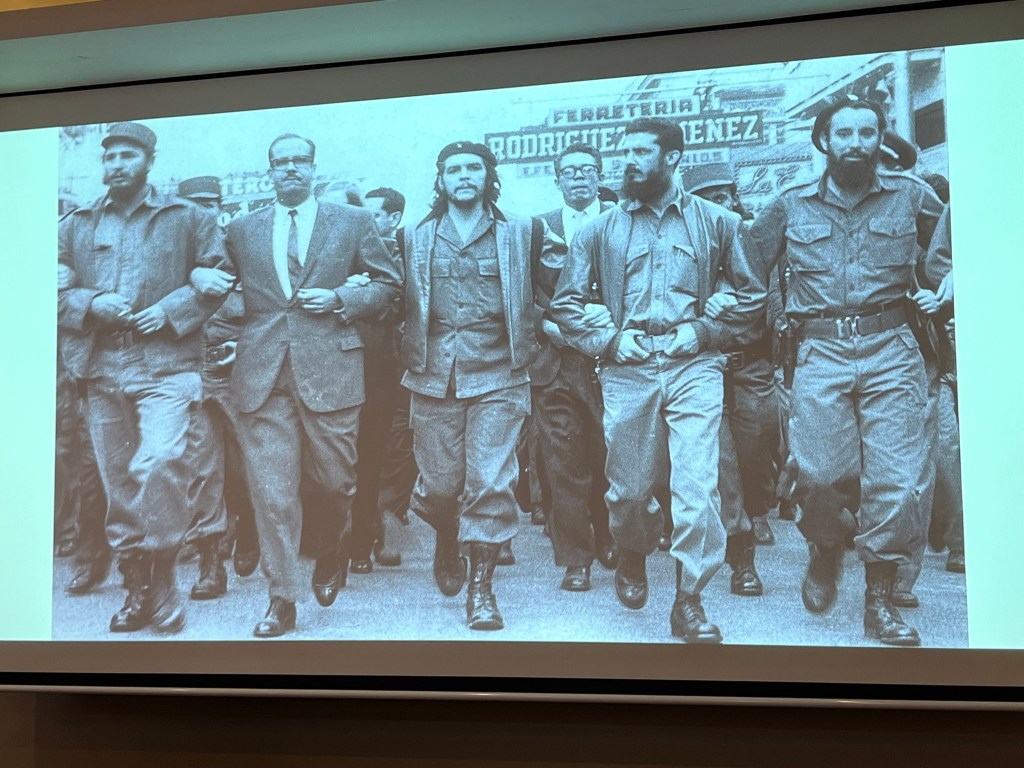
Another leader we discussed with Patricio Roca who was not president in Panama but was a leader of the lower class throughout Latin America was Ernesto Guevera de la Serna, also known as Che Guevera. Che grew up in Argentina and became a doctor working on leprosy where he learned the plight of forgotten communities. He eventually became the meteoric figure he did by being the voice of the common man, who felt left behind. He was active for only 20 years before he was killed in Bolivia by operatives assisted by the CIA at the age of 39. His activity started in Argentina and went throughout South America, Mexico, and Cuba. He also took his modus operandi to Africa, Europe, and Russia. While his methods for getting results was not appreciated by all, his leadership of the common people has made him a legend and a figure that will find his face on t-shirts for generations to come.
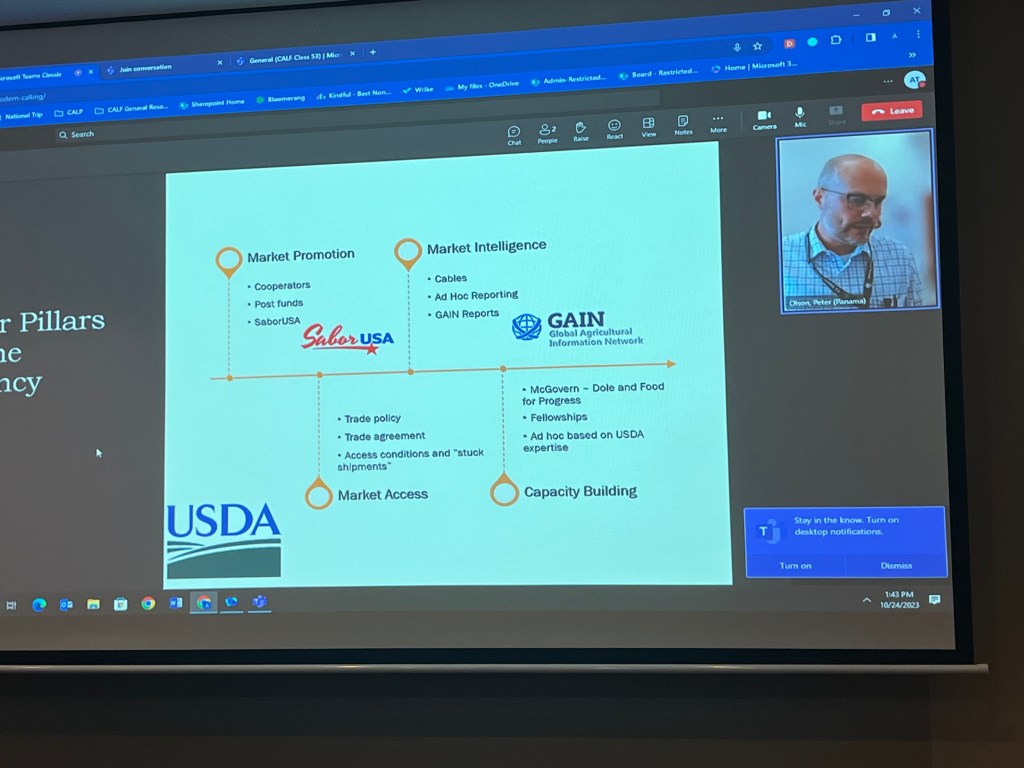
After that the class had some time to refresh as we waited to meet with Peter Olson, the US attache’ with the Foreign Agricultural Service. Peter was unable to join us in person, due to the ongoing protest surrounding the controversial mining extension contract. Peter educated us on the active US and Panama bi-lateral trade agreement and some of the political implications of the current agricultural polices of Panama.
After that we were able to synthesize all our experiences in Panama. Our synthesis leaders asked us to reflect on many of the themes of the day. We were asked to consider how we would react if we were in a refugee situation. They also asked to compare and contrast the protests surrounding the mine today compared to the reaction to the reversion of the canal.
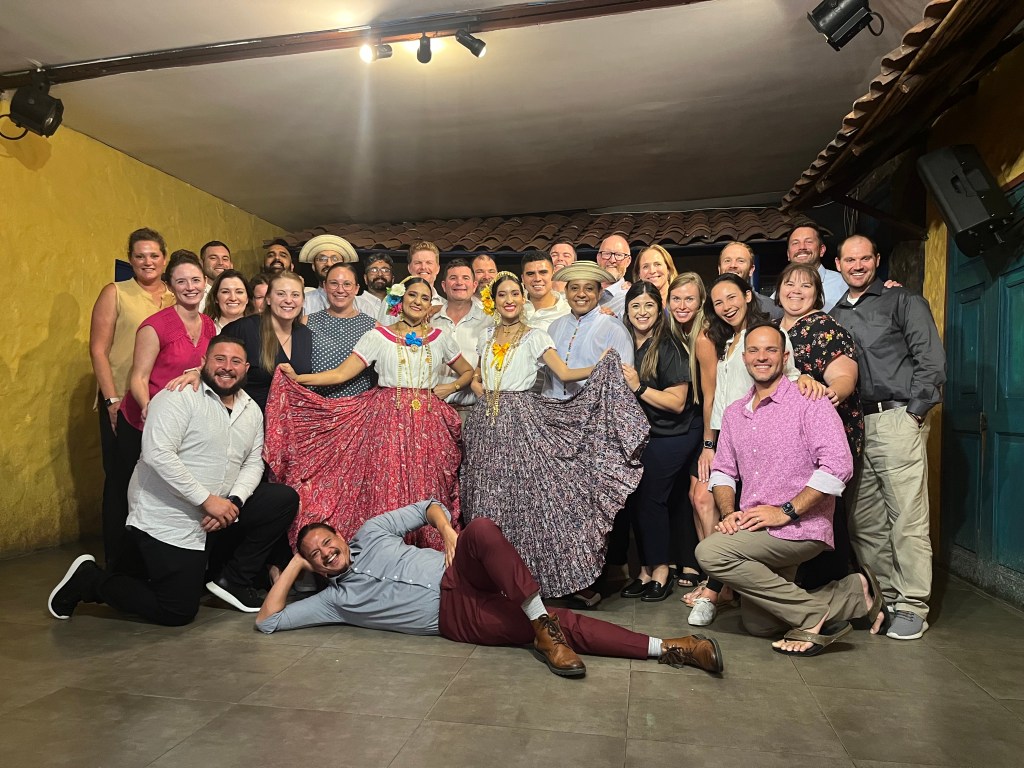
Then off to a fabulous Panamanian dinner at Las Tinajas! There, we were treated to a fantastic show, with the incredibly passionate and vibrant folk dancing. The energy and excitement levels were high, and many of the fellows had a hard time winding down as we lay in our beds awaiting our 5:15am departure for Colombia and Medellín!
As we went to sleep, each fellow reflected on our individual experiences of the American dream. While outside our rooms, tear gas canisters exploded, as our friends in Panama struggled with the Latin American version of their own American dream. The history here has everyone searches for their own dream, but the realization of it is very different depending on the country in which you live and are raised. It leaves us all wondering about our own lives, the zip codes where we were raised, our communities who loved us, and how we can continue to lead in a world that asks us to embrace complexity and seek better for all.
 California Agricultural Leadership Program
Leave a comment