
As we started our 9th day of the International Trip, we received some great wisdom from our tour guide Isaac. Isaac said, “If you want to see something you have never seen, you have to do something you have never done.” We were immediately taken back to the X-M-E learning model we have learned in the program. Through experiencing (X) new cultures, we challenge our existing mindsets and develop new ones (M), and ultimately express ourselves in new ways (E). This model allows us to truly change our understanding of others and develop new perspectives of the world. We set off to San Basilio de Palenque, Ciudad Del Bicentenario and for a meeting with the Colombian Peace Corps with an energized and renewed focus on our upcoming experiences.
It was an early start for Class 52 today to beat the heat and humidity on Day 9; our first stop was at San Basilio de Palenque, the first town in the western hemisphere founded by escaped slaves. The drive took us ~32 km south of Cartagena. On the way, we passed through “The Real Cartagena,” according to our guide, Issac. The disparity observed from the higher social classes to the poor, level one and two classes was a depressing comparison. As we headed out of the city, we passed by the refinery which processes the number one commodity in Colombia: oil and gas. The smell of burning oil was overwhelming, and we were grateful it didn’t last long. The further south we traveled, the people, traffic and houses were replaced by beautiful, lush vegetation. As we passed through small towns there were red Brahman-influenced cows grazing on the side of the road. One was actually on the road and we had to slow as she crossed.
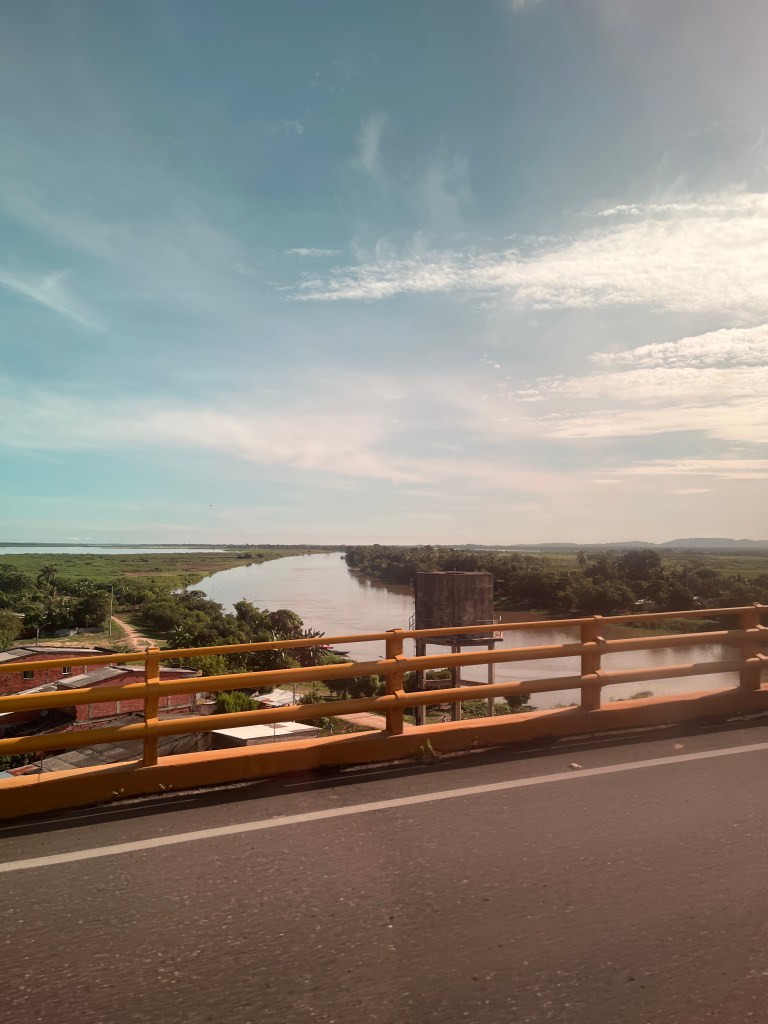
We passed over a channel that was dug by slaves to connect the inner bay to the Magdalena River. It was a surreal experience to cross over the channel as we were headed to the first town that was established and free of slavery.
Upon arrival at San Basilio de Palenque we were greeted by our tour guide for the Palenque experience, Escarli, as well as extreme heat and humidity. Our class was treated to a walking tour of the town which was founded in 1603 by Benkos Bioho. Threaded through each interaction and stop of the tour was the theme of “honor.” The community had a high value for honoring its motherland of Africa, its heritage and its people. Therefore, many of the practices of the community were practices of Africa. The Palanqueros’ commitment to their ancestors’ traditions in a home away from home reminded us of our experience at the Dar Al-Hijrah Islamic Center & Mosque in Minneapolis, and the way honor and tradition are observed throughout the African diaspora.
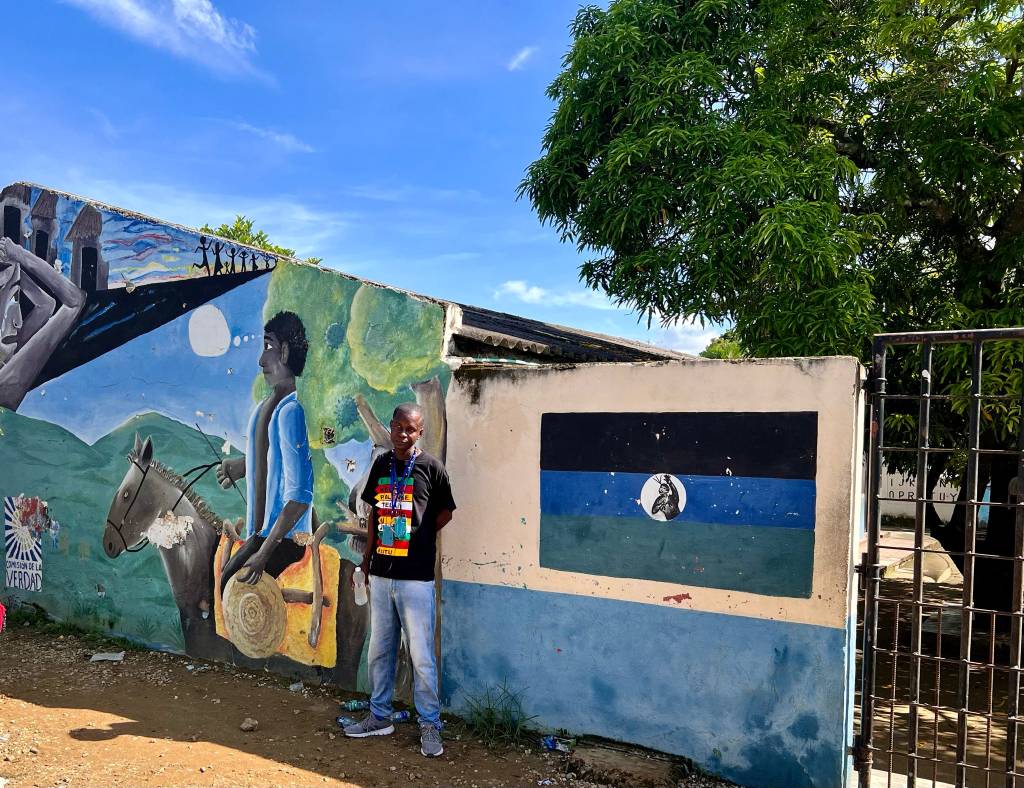
Palenque’s flag is black, blue, and green. Black represents the people – past and present. Blue represents the Atlantic Ocean that was traveled when slaves were taken from the African continent and traded in Cartagena. Green represents the coastline of West Africa. In the middle of the flag is an image of Benkos Bioho, the community’s founder.
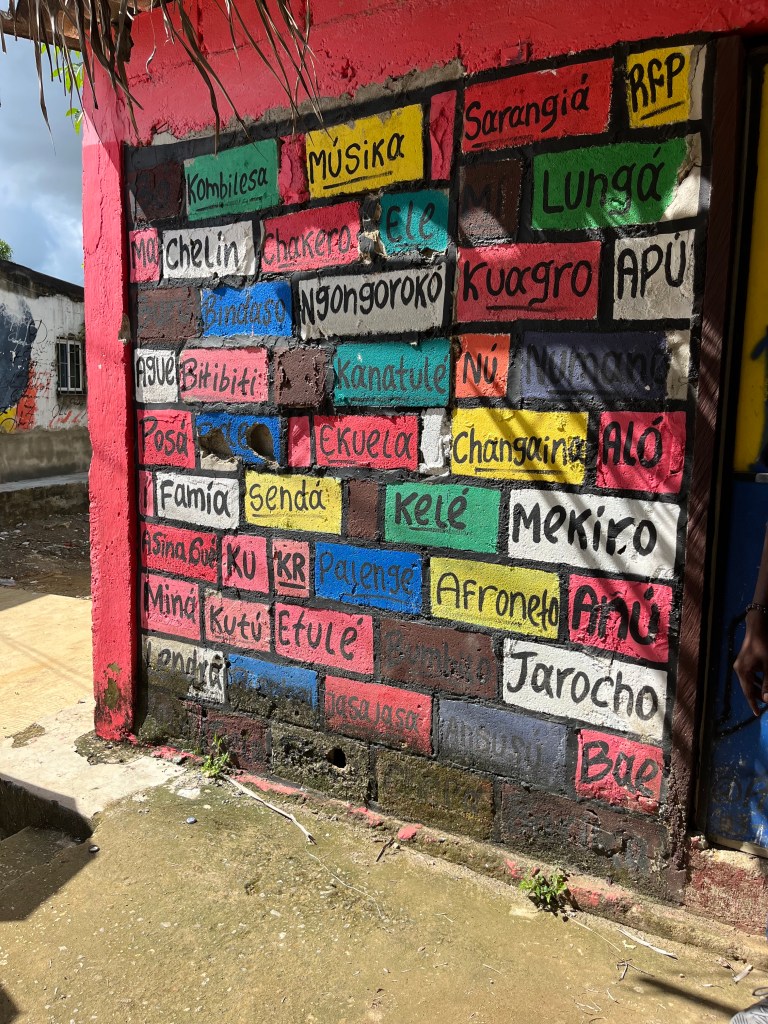
Palenque has its own language, and we were invited to ask for definitions of words that were painted on a brick wall. “Apú” is water, “chakero” is messenger, and “kombilesa” is friend.
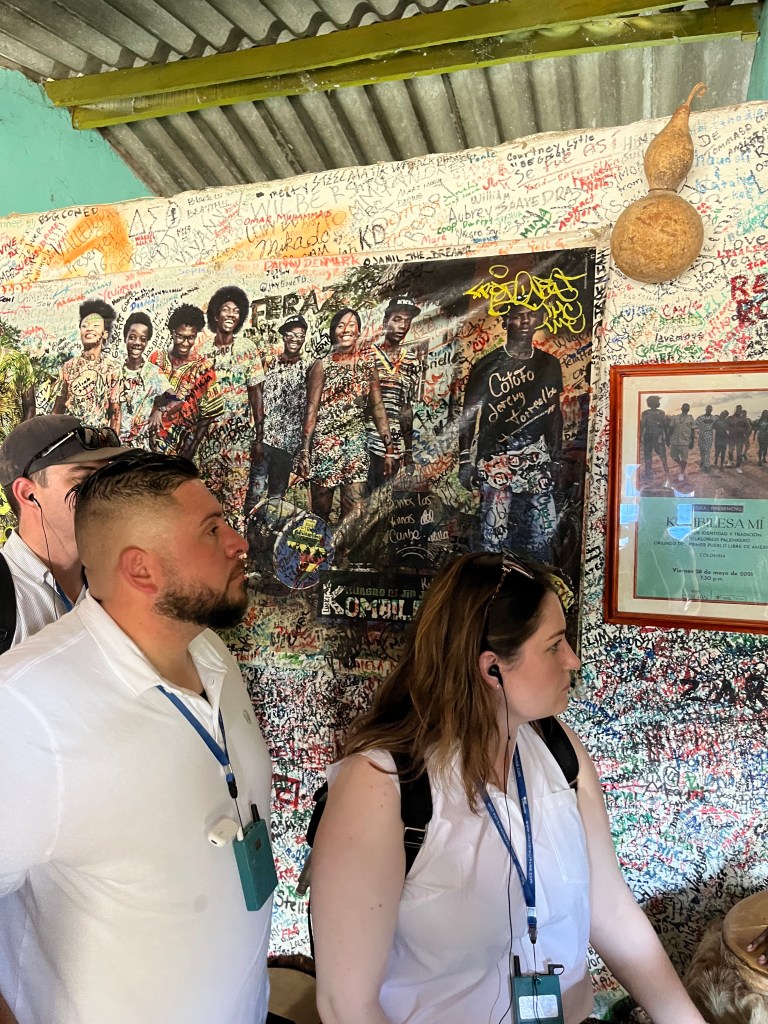
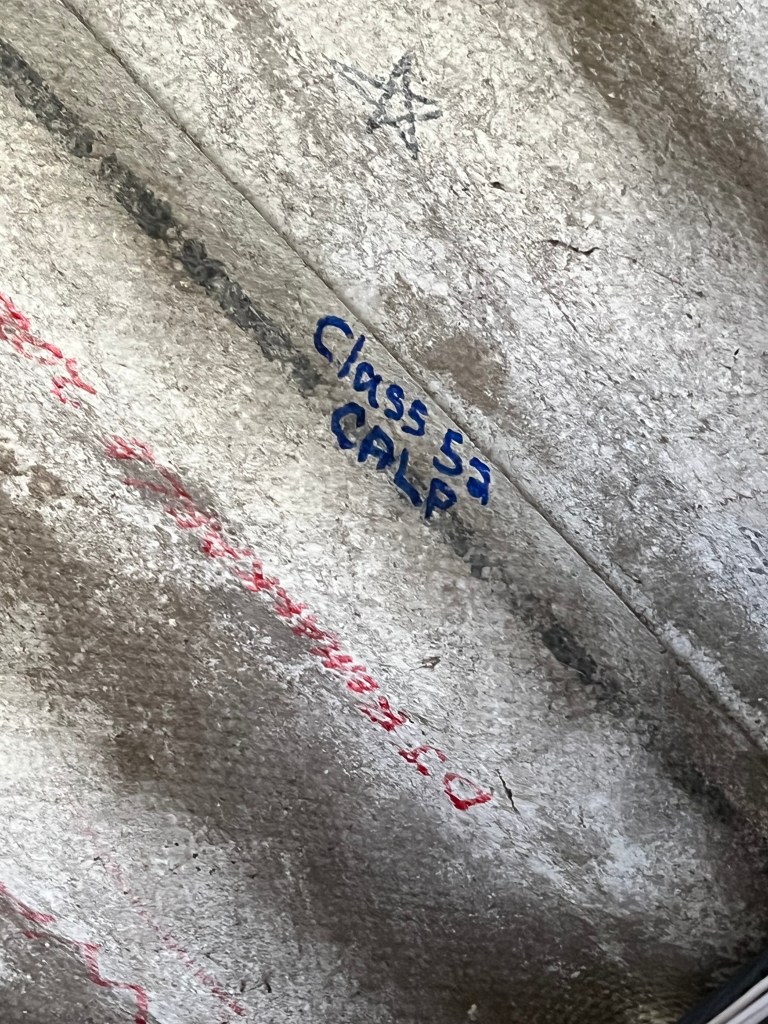
Our next stop was to the studio of Kombilesa Mí, a Palanquero band that has traveled all over the world including three trips to the U.S. Their music center was filled with musical instruments (including drums we played yesterday) and signatures of people who had visited before on each of the walls and roof. “Class #52 CALP” was our contribution to the roof! We were reminded of the importance of music as an identifier and a tool of resistance. For example, in La Boquilla and Cartagena, Champete music is central to their identity. Palenque’s music, a fusion of traditional music (Mapale, Bullerengue) and urban rap, was a unique means of expression that is being shared all over the world.
We also had the opportunity to tour an original home and learn how it was constructed. The house we toured was ~100 years old and was built with mud and cow dung walls with a palm-leaf roof. Each home in the village can house multiple generations of ~19 people at one time. Our tour guide at the house, Juan Carlos, has 13 people living in his home. At the back of the house we were invited to have a cup of coffee that was very hot and very sweet. We ended the tour in the home learning about the tradition of hair braiding. During colonial times it was very unsafe for slaves to express emotion so one way that they could show how they were feeling was through braids. In addition, the hair braiding was a way to map freedom routes, so those who were able to escape enslavement could make their way to Palenque without getting captured or lost.
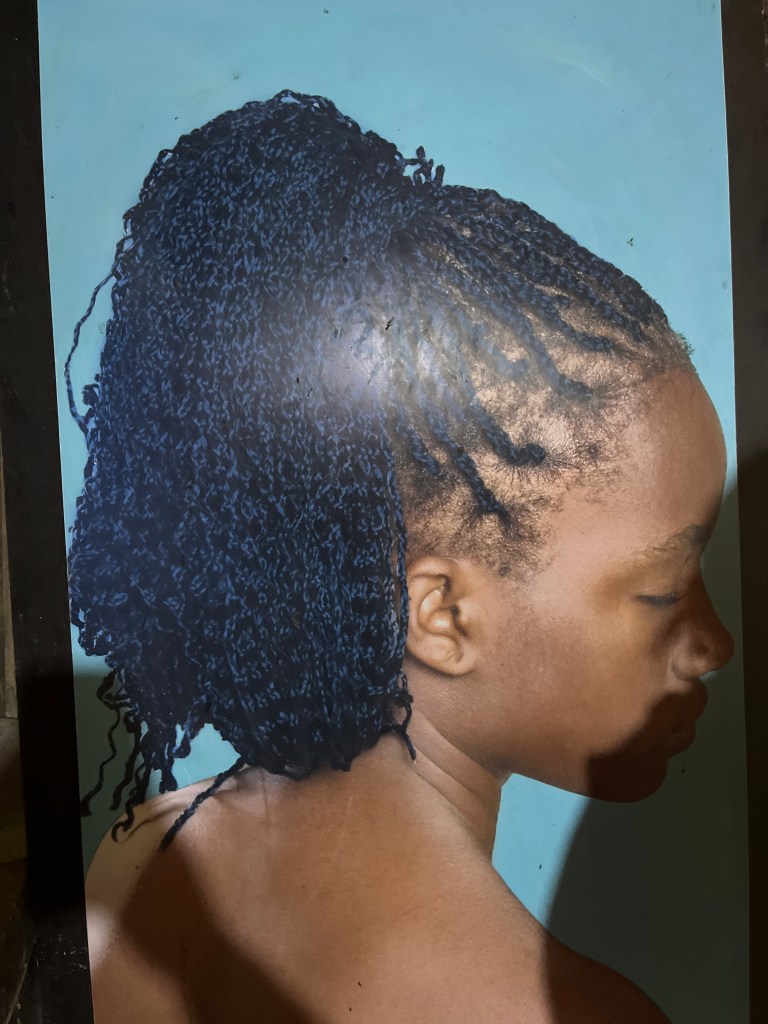
Another form of expression is how braids are worn. For example, free-hanging braids represent freedom!
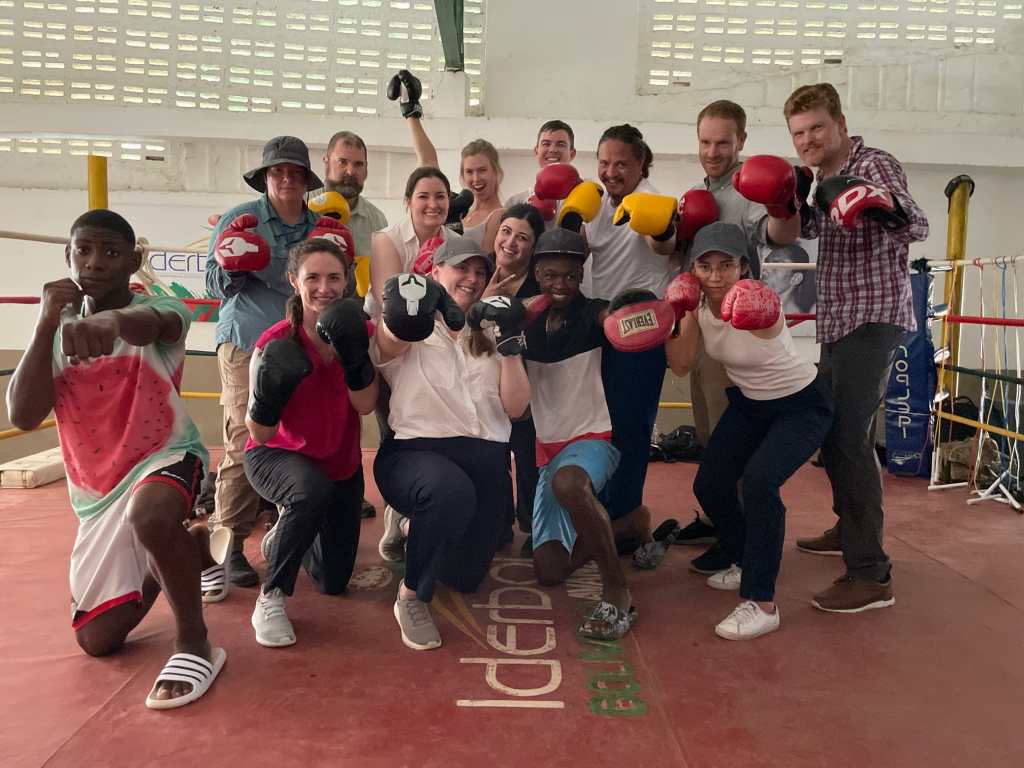
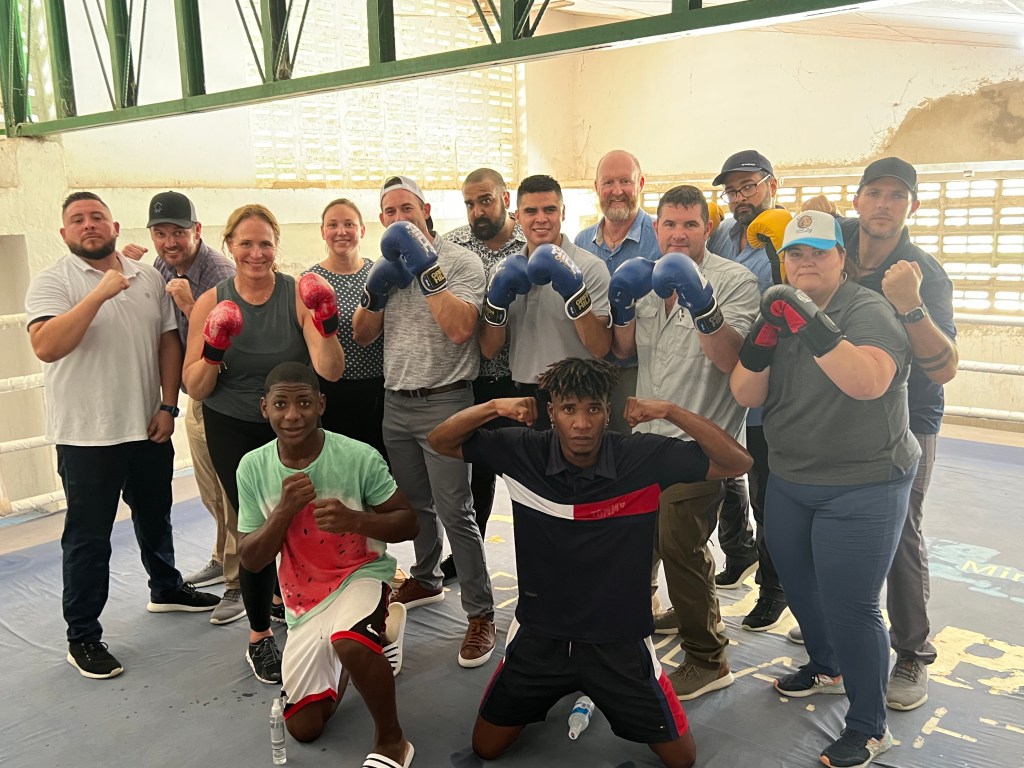
Our final experience at San Basilio de Palenque was a boxing lesson. Boxing has been a part of the community culture because they “ …have always been fighting.” One of the most famous community members was Antonio Cervantes Reyes, the 1974 World Light Welterweight boxing champion. Cervantes was granted a favor from the Colombian President after his win and he asked for electricity to be installed in San Basilio de Palenque. We noted this as a great example of servant leadership and altruism. Cervantes used this great opportunity to give back to his community and provide opportunities for young people. The boxing gym in the community is where they give lessons and train other fighters. Class 52 got a boxing lesson from the trainers. After a brief lesson on foot and hand placement, we were then able to test out our new skills with a trainer. Gloves and everything! After two brief sparring matches each we pulled off our gloves, doused our hands in sanitizer, thanked our hosts and carried the smell of sweaty boxing gloves for the rest of the day! Such an amazing experience!
Our journey back to Cartagena was a quiet one as folks reflected on their experiences in Palenque. A community with limited resources was rich in its connection; a people who faced oppression vividly expressed itself in murals, music, hairstyles, and movement. As we approached Cartagena, the greenery gave way to an urban center. Ciudad del Bicentenario – the nation’s largest Housing, Community, and Economic Development project – is home to 170,000 people and served as a “sneak peak” into the work of the Santo Domingo Foundation, an organization we will connect with in Bogotá.
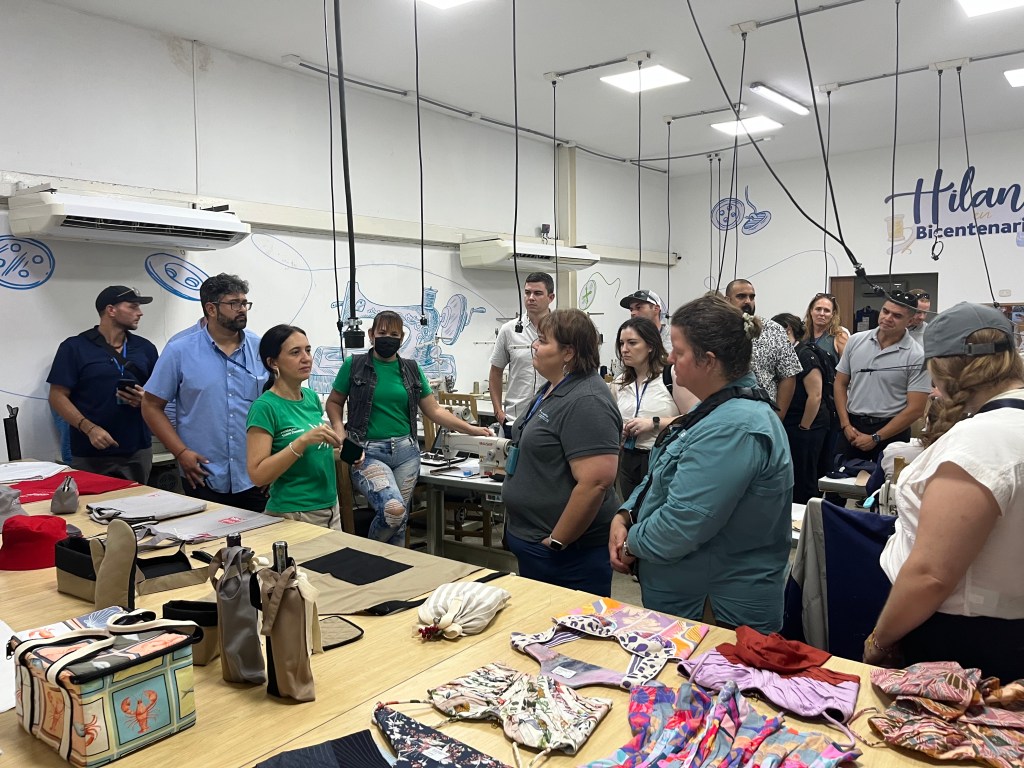
An urban housing project designed to serve one of Cartagena’s lowest-income neighborhoods, Ciudad del Bicentenario’s goal is to become a “20-minute city” – one in which homes, worksites, health centers, and schools are all located within a 20-minute radius. The Santo Domingo Foundation uses a three-pronged approach: economic development, urban development, and community development. A walk through the project seamstresses’ workshop showed how the community repurposes unused uniforms and scrap fabric to create clothing and accessories. The school’s art center serves as a center for material exchange, a place to repurpose recycled materials, and a safe space for children to work through trauma via art therapy. And, in the newest part of town, a community park offers families access to tennis courts, baseball fields, and open space. The Foundation’s desire to develop leaders and empower the residents of Ciudad del Bicentenario to determine their own development reminded us of the lessons learned through CALP and the leaders we can be within our own communities.
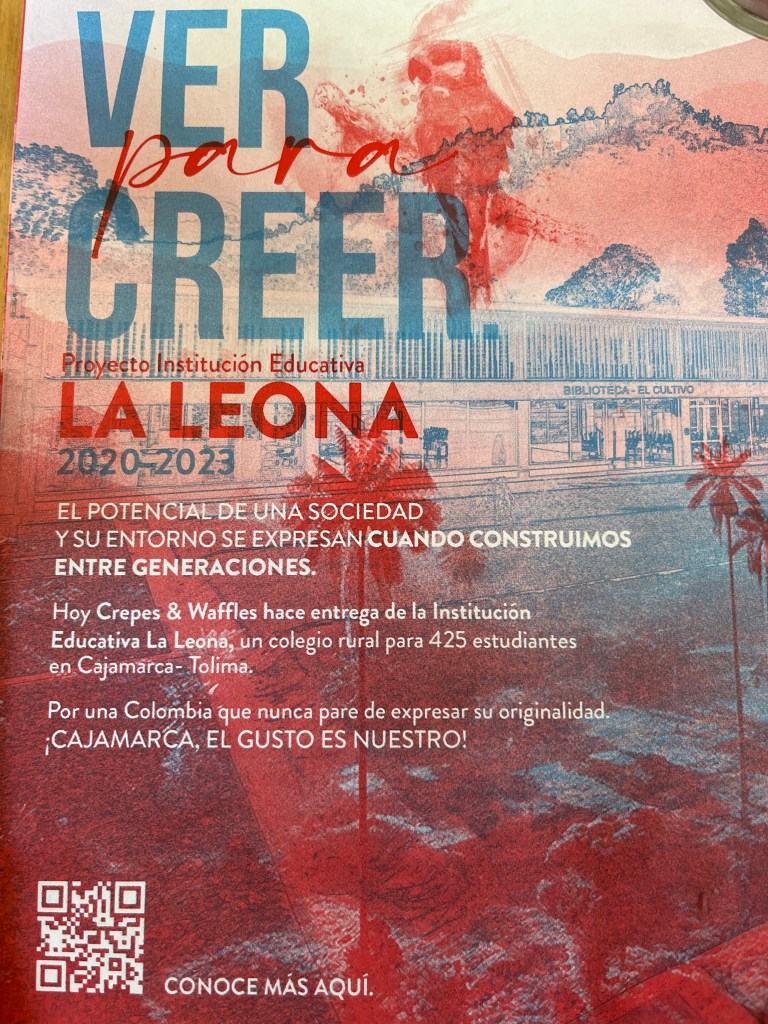
Rumbling stomachs aplenty, we made our way back to Bocagrande for a late lunch at Crepes & Waffles, a Colombian creperie chain that exclusively hires single mothers and women in need. Karen, our waitress, opened up about the difficulties of being a single parent in Colombia and shared that she supports both her parents and her two young children. We were touched by the pride she takes in her work and humbled by the resilience demonstrated by the many women we’ve met in Colombia. The courage embodied by these women in charting their own course within a conservative, machismo culture has been a through line this trip. The women of PACT World Colombia who have created a supportive community that tackles issues around gender-based violence; the Damas and Madres of DAMARTES that defy cultural norms to generate much-needed income for their families; and Karen and her coworkers’ non-traditional roles within their households are all examples of women serving as leaders and taking pride in their stories. Our class solemnly reflected that while seeing female leaders is the norm in most of our communities, it is the exception in many parts of Colombia.
The day concluded with a talk by Nestor Arenas (Programming and Training Specialist) and Grayson Middleton, a Peace Corp Volunteer. Grayson provided valuable context of the area to our class and made Campeche, his placement town, come alive with tastes of almojabanas and ciruela cake. His use of an Appreciative Mindset – an approach that encourages its practitioners to recognize the strengths, opportunities, and successes around them – as a starting point to affect change and his role as a facilitator in his community reminded us of the servant leadership we’d like to model at home.
Issac was right, “if you want to see something you have never seen, you have to do something you have never done.” Many of us have never traveled to Africa, but we had the opportunity to experience “Africa out of Africa” while visiting San Basilio de Palenque. Our mindsets were challenged with the reality of living without the amenities that we take for granted like running water and air conditioning while simultaneously appreciating the beautiful – a unique language, music, and the tradition of boxing. We will be expressing our love and respect for Cartagena and Palenque by telling their story and sharing aspects of their rich culture. As we end our time in northern Colombia, we will take the following leadership lesson with us: people are people no matter your location. There are always a plethora of big, unsolvable problems in the world, but a single person can make a difference by identifying a need and leaning in.
 California Agricultural Leadership Program
Leave a comment