
At the end of sessions on day 10, local tour guide Vivi advised fellows of class 52 to start their day with a light breakfast. Curious and wondering what was to come, we quickly had our questions answered when class 52 arrived at Paloquemao Market. Awaiting the fellows was a panopoly of local agricultural products: the market was awash with the vibrant colors of fresh cut flowers, local fruits and produce. Quickly class 52 felt as though they had just been dropped into a cultural immersion of Bogotá. Paloquemao Market is open to the public, but has the right to restrict entry to anyone they feel necessary, so we felt extra lucky. Tourism is allowed, but groups need to ask for permission and make an appointment for market access, which class 52 had the pleasure of gaining for this spectacular experience.
The Paloquemao Market is open daily and you can find owners of restaurants buying their fruits and produce fresh for the day’s visitors to use in their restaurants. We entered the market wide-eyed at the sights and smells and the first stop was an explosion to the tastebuds: arepas con queso and pandebono con queso. Arepas are small savory corn cakes that are baked freshly daily by locals (also featured in the movie Encato) and pandebono is a type of Colombian bread baked with cheese and filled lightly with guava paste.

The fresh cut flowers were the first to catch our eye with bouquets of roses in more colors than we could count, perfectly geometric hydrangeas and a plethora of other beautiful flowers like orchids and birds of paradise.
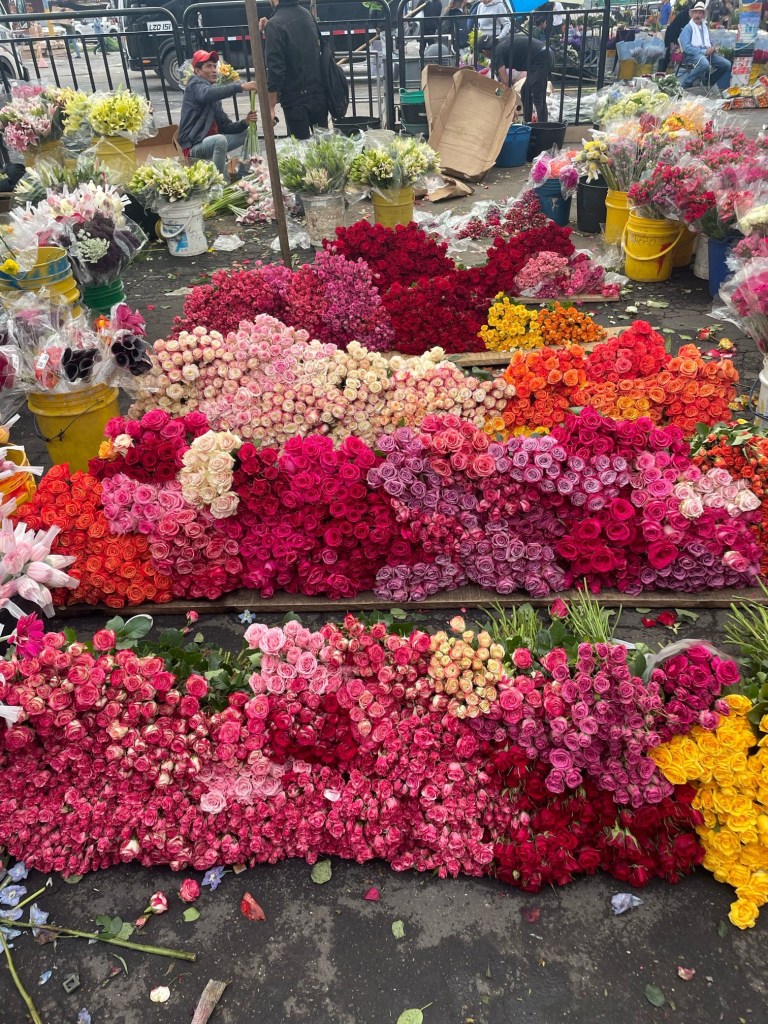
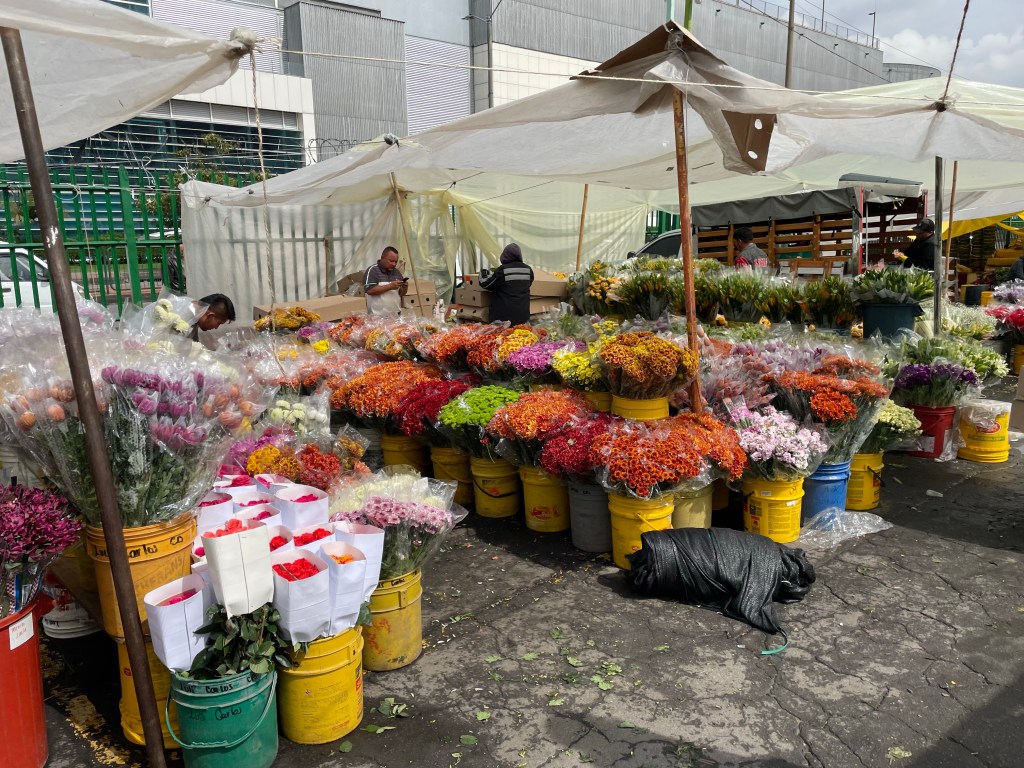
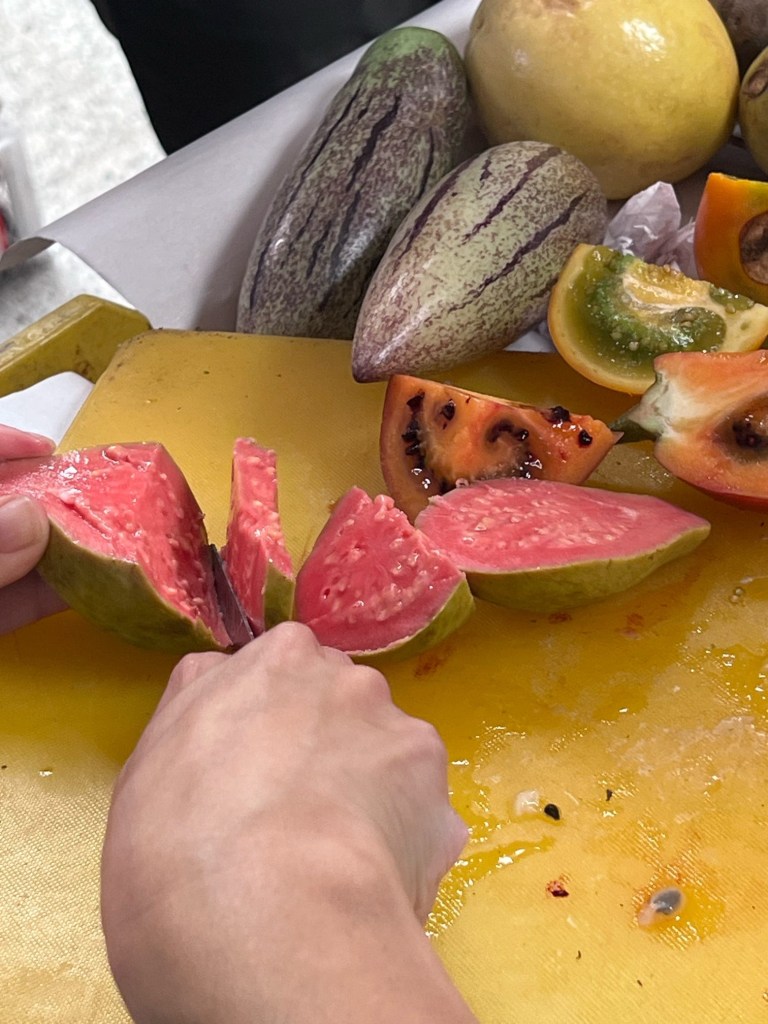
From the beauty of the floral section, next in the Paloquemao Market we ventured deep into the fruits and produce area, where we were met with a labyrinth of aisles filled with numerous vendors. After some time walking, our tour guides led us to an area where they had prepared a fruit tasting experience. This tasting consisted of multiple fruits grown locally in Colombia such as fajoa guava, lulo fruit which is said to be good for the sore throats, tree tomatoes as well as 3 types of passion fruit – maracuja, curuba and granadilla. Lastly guanábana fruit, which is said to have good components for those with cancer and other health benefits. This tasting included tropical flavors full of acidity and happiness as fellows cherished this one of a kind tasting experience.

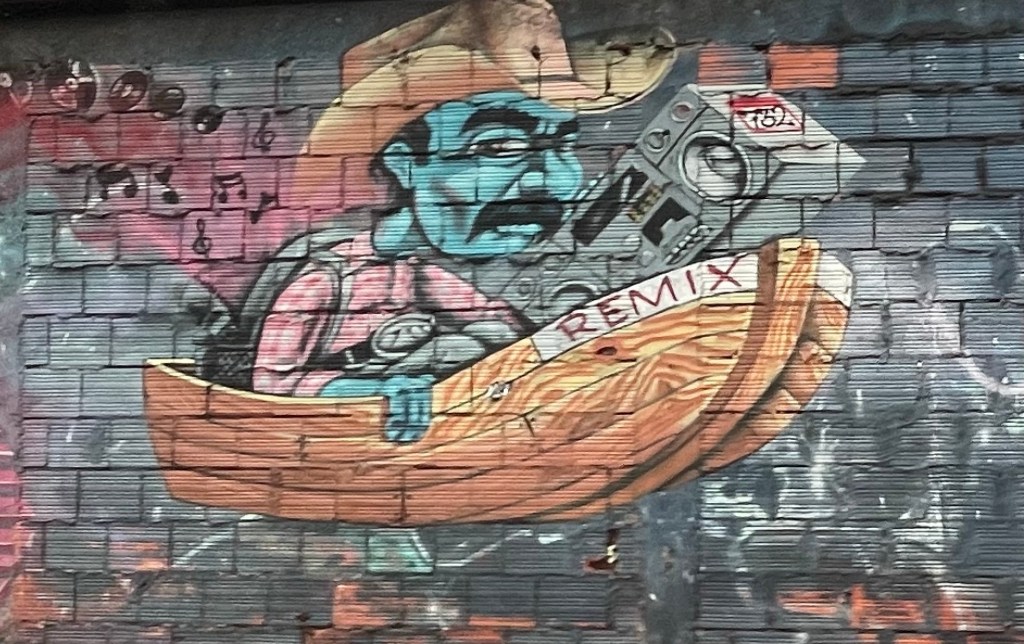
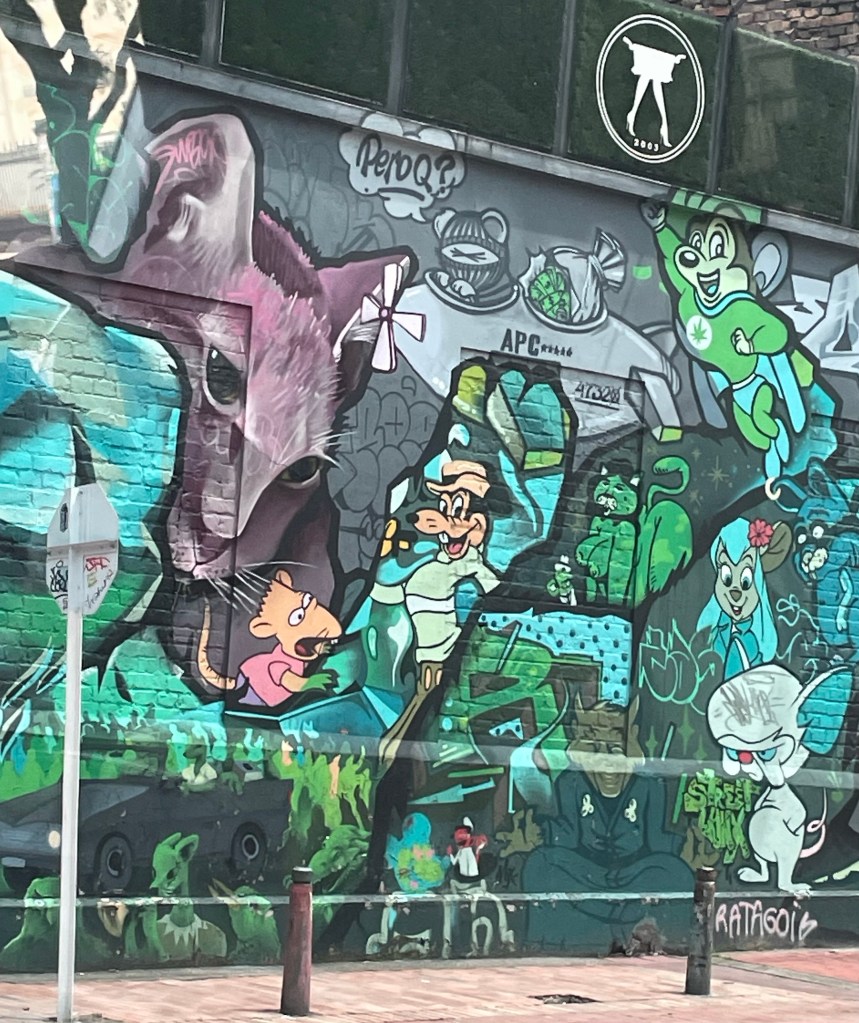
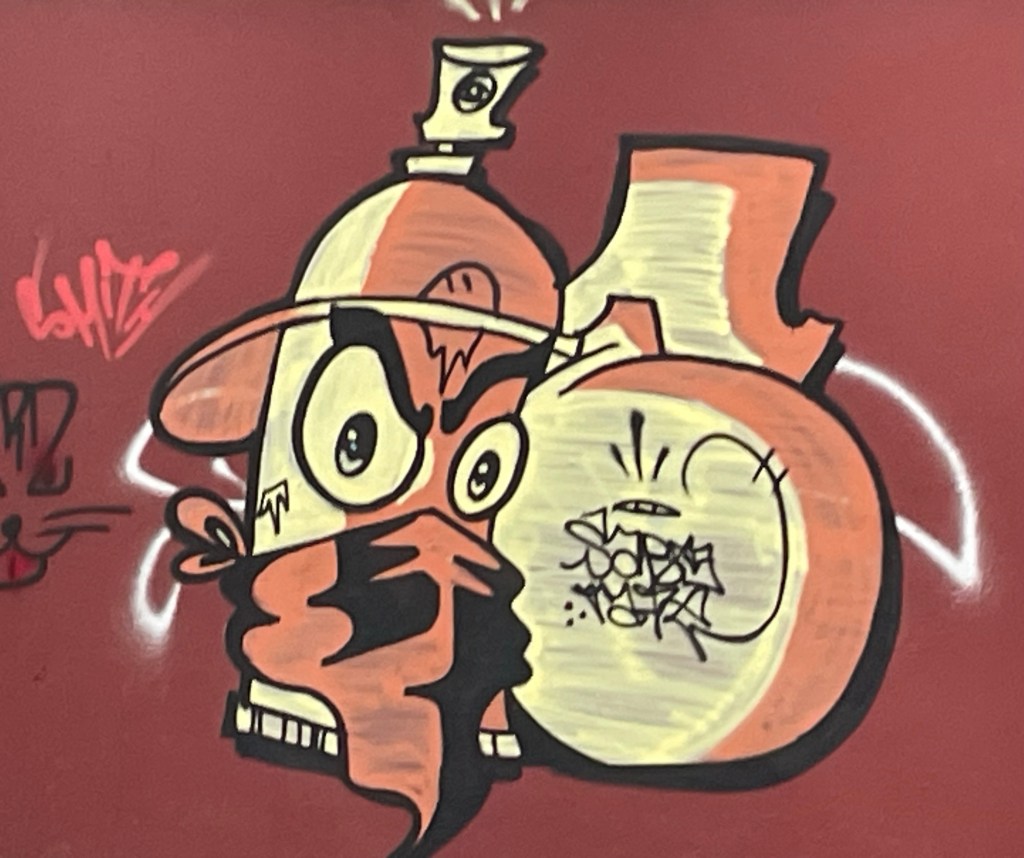
During our travels today, we saw many more examples of very colorful and creative street art which has come to be emblematic of the city’s journey. We learned that in the eighties and nineties the city started getting ‘tagged’ and covered in street art, highly influenced by rap and hip hop culture. There was a shift to more murals by graphic designers and artists after the turn of the century. There was even a period when stencils were used – an easier, faster way to paint and run without getting caught by the police
In 2008, a 16 year old juvenile was caught spray painting. He ran, the police caught up to him, a fight ensued and the young boy was killed. To justify his death the police planted a gun in his bag, saying he was robbing a bus. The victim, from a wealthy family, hired lawyers, and the police were indicated in 2021.
From 2013 to present, a new era of street art started to take shape. It became a way for social and political protest. Many say ‘the walls speak to you’. Many people see street art as a new medium to tell their truths – those not told in conventional biased media. Street art is no longer a crime in Bogota.

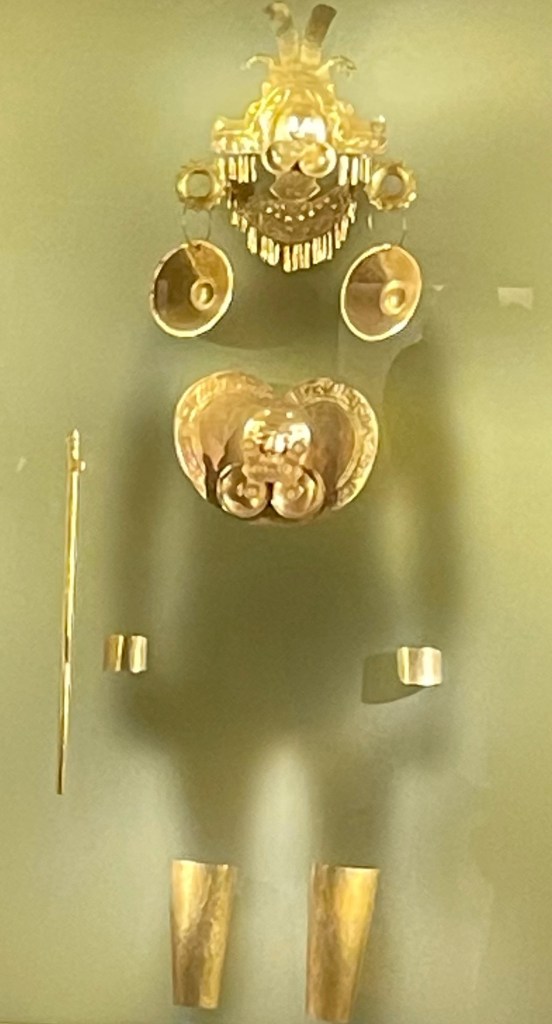
Our next stop was The Bogota Gold Museum, Museo Del Oro. Not just about gold – rather the largest collection of gold artifacts in the world – it provided a glimpse into the lives and culture of the pre-Hispanic, indigenous people of Colombia more than 500 years ago.
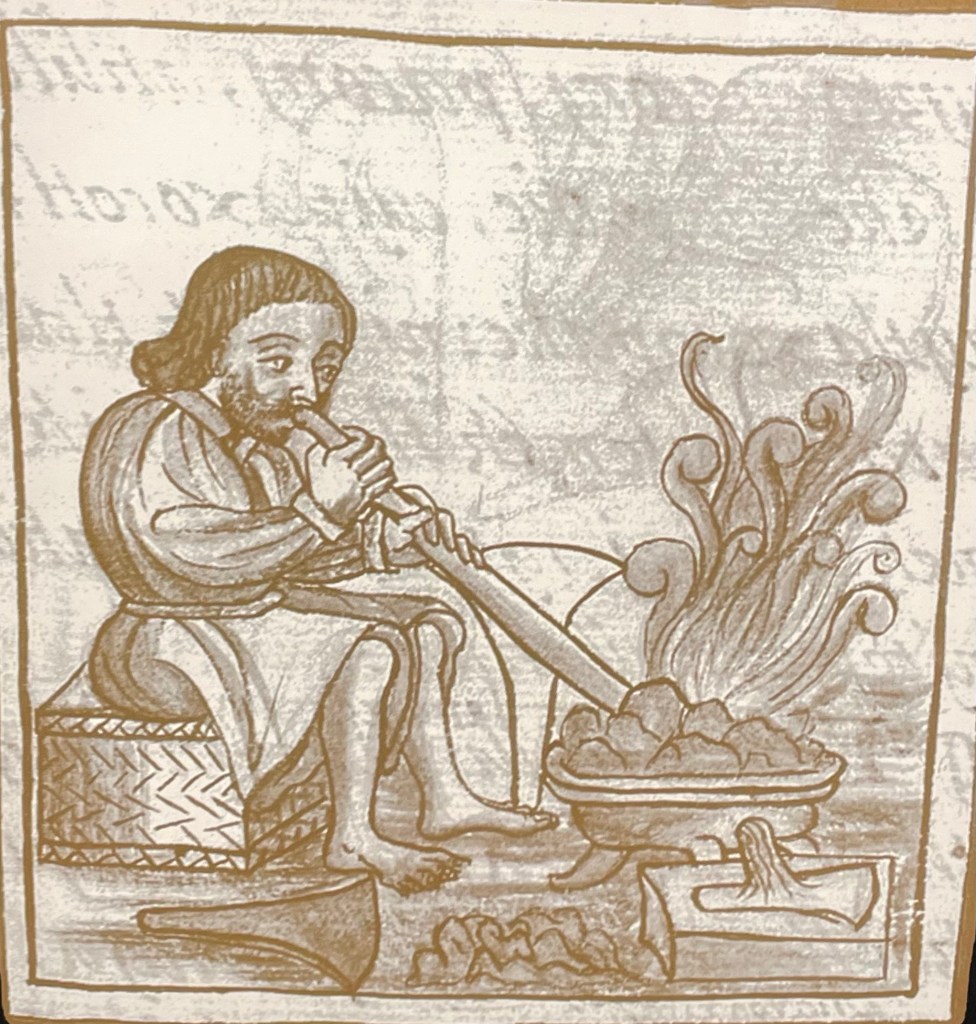
In the 1500’s – indigenous people of this time did not have a written language – instead relying on verbal communication. Anything written was of Spanish origin, which could be problematic when it comes to understanding the complexity of the indigenous cultures. We learned about the process, styles, symbols and offerings made of gold, and learned that many items were used in daily life or sacred rituals. We saw several examples of poporo quimbaya – a vessel used by indigenous cultures to store lime for their ritualistic chewing of coca leaves for such things as illness, energy and cure for altitude sickness.
For the third segment of our Bogota city tour, we continued our journey to a district in Bogota known as the Bronx. Preceding the year 2016, the Bronx held the infamous reputation of being one of, if not the most dangerous neighborhoods in Bogota. This period was known for narratives of drug-related issues, prostitution, and even reports of human torture. On May 28, 2016, a mere few months into his tenure as Mayor of Bogota, Enrique Peñasola resolved to bring an end to the distress plaguing the Bronx.
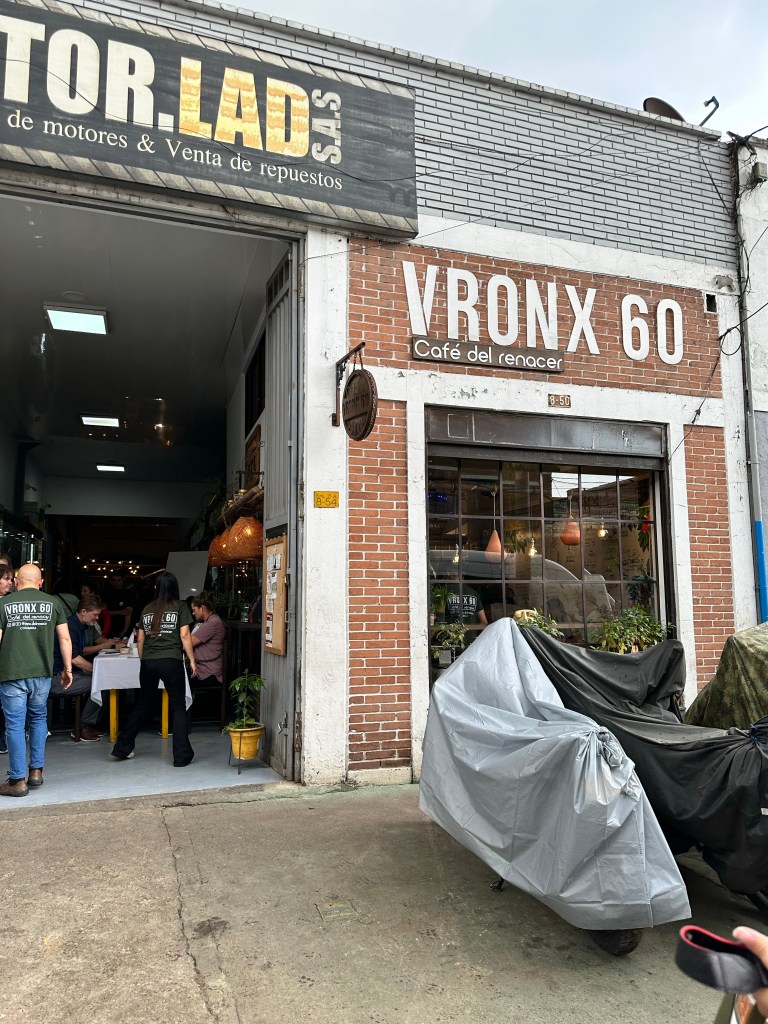
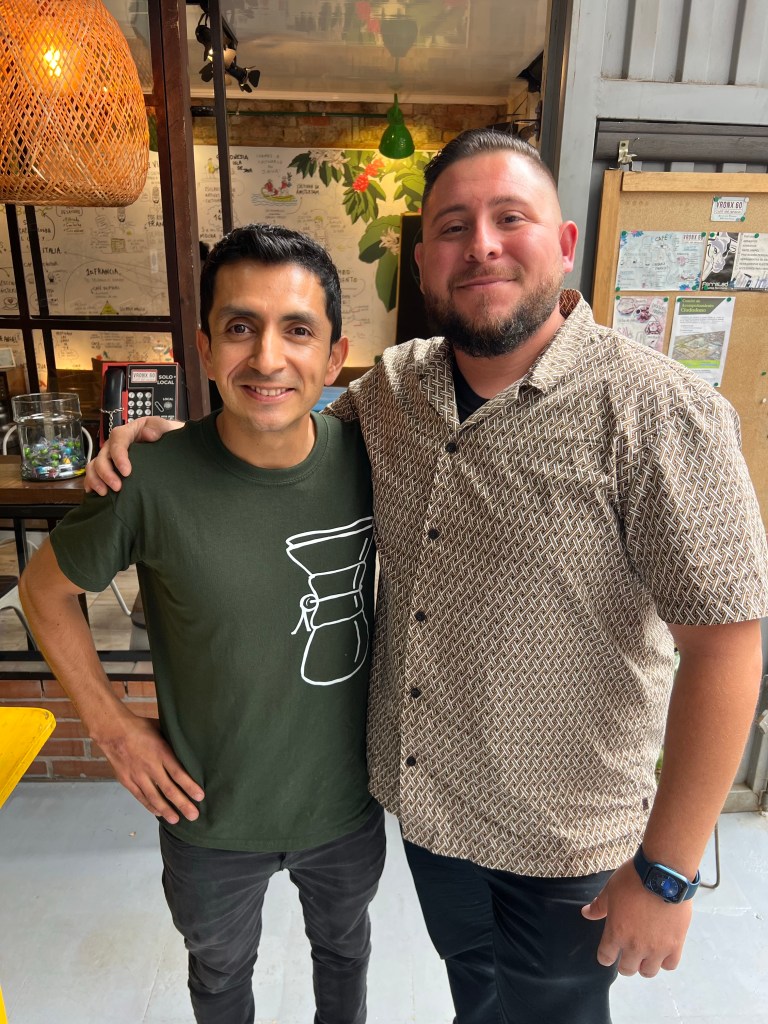
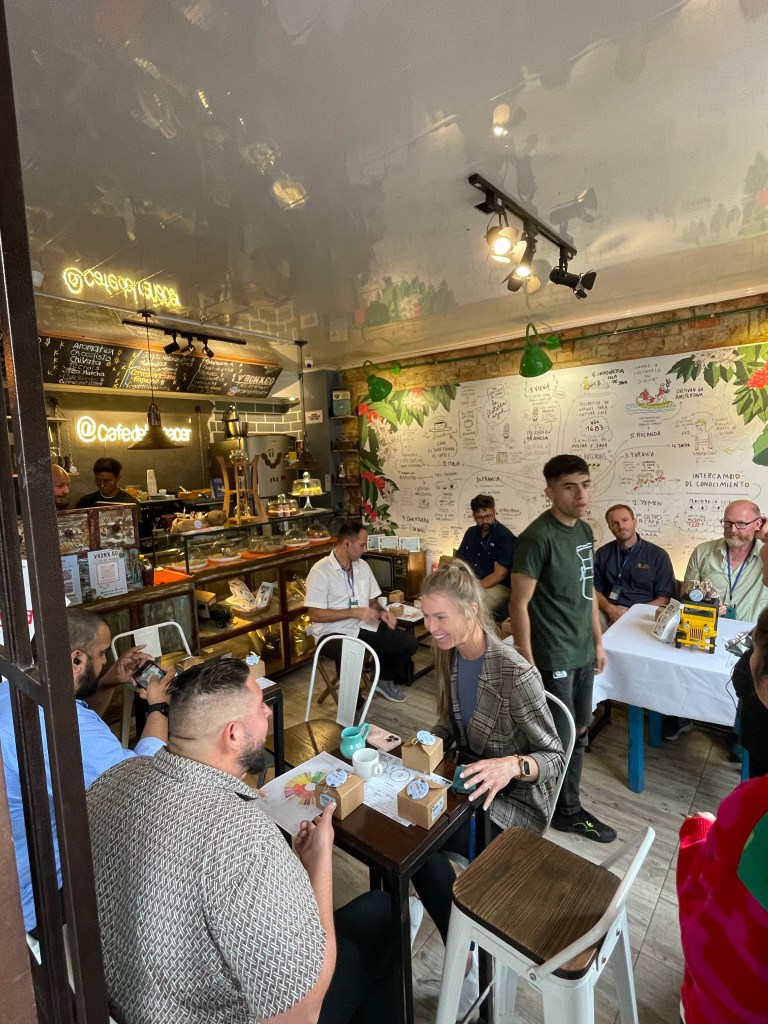
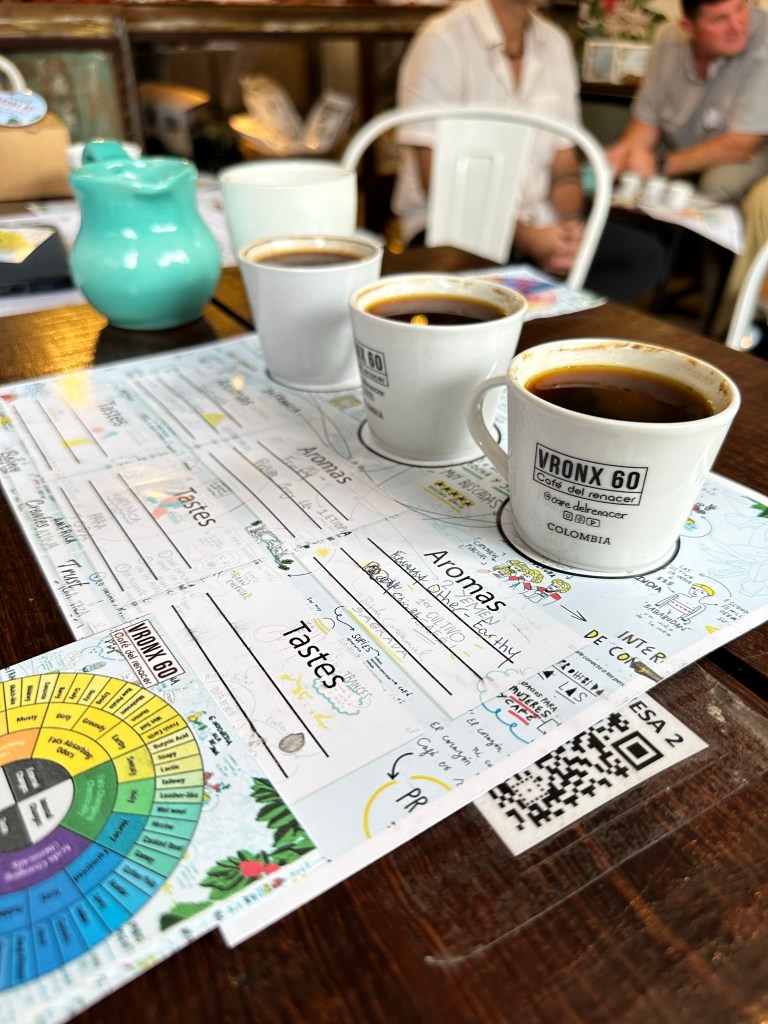
Today, the Bronx perseveres in its journey of revitalization. Nestled between Calle 8 and Calle 9 on Carretera 15a, Vronx60 Café del Renacer emerged as a symbol of this ongoing renaissance. Vronx60 is celebrated for its mastery in brewing the finest specialty coffees that Colombia has to offer, fostering a sense of community. Owners Carlos Alberto (Beto) and Edna, driven by a dream they believe in, have become a source of inspiration within their community. During our visit, they graciously hosted a coffee tasting, during which we explored the intricate aromas and flavors of three of their distinctive coffee varieties. Beto articulated his conviction that the Bronx community deserved an inviting space. Having experienced the hardships of this neighborhood firsthand and the loss of numerous friends to drugs and adversity, he has, through resilience and determination, chosen a path that allows him to give back to his community. Again, another inspiring example of someone who makes a difference where they are and for who they can.
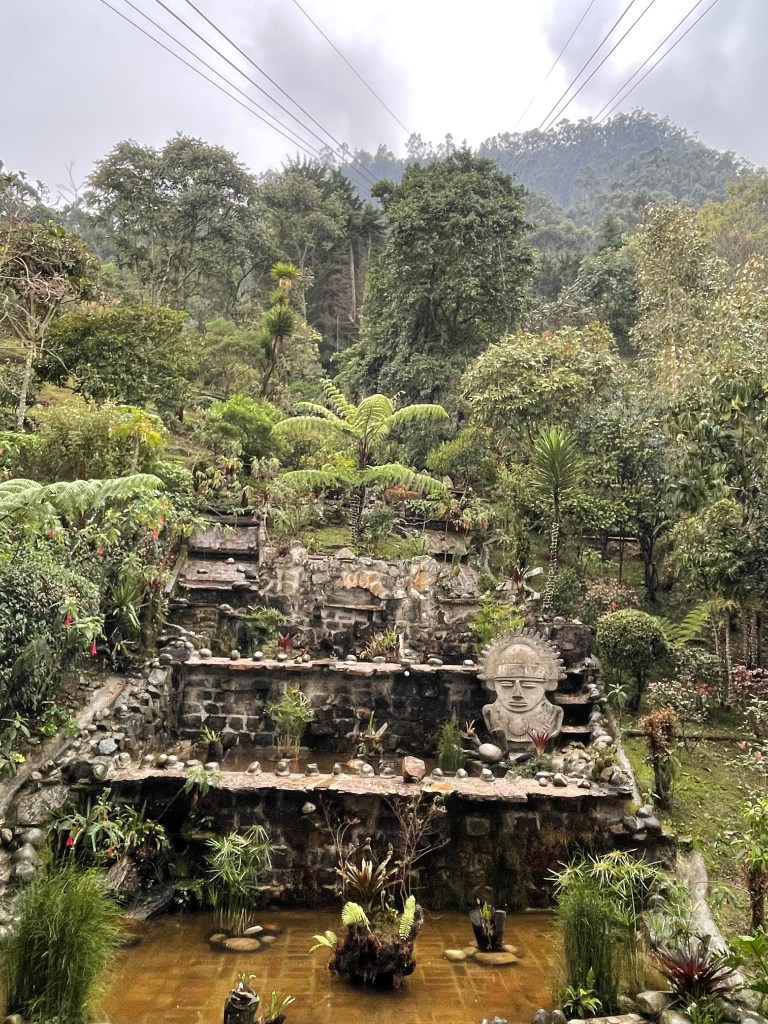
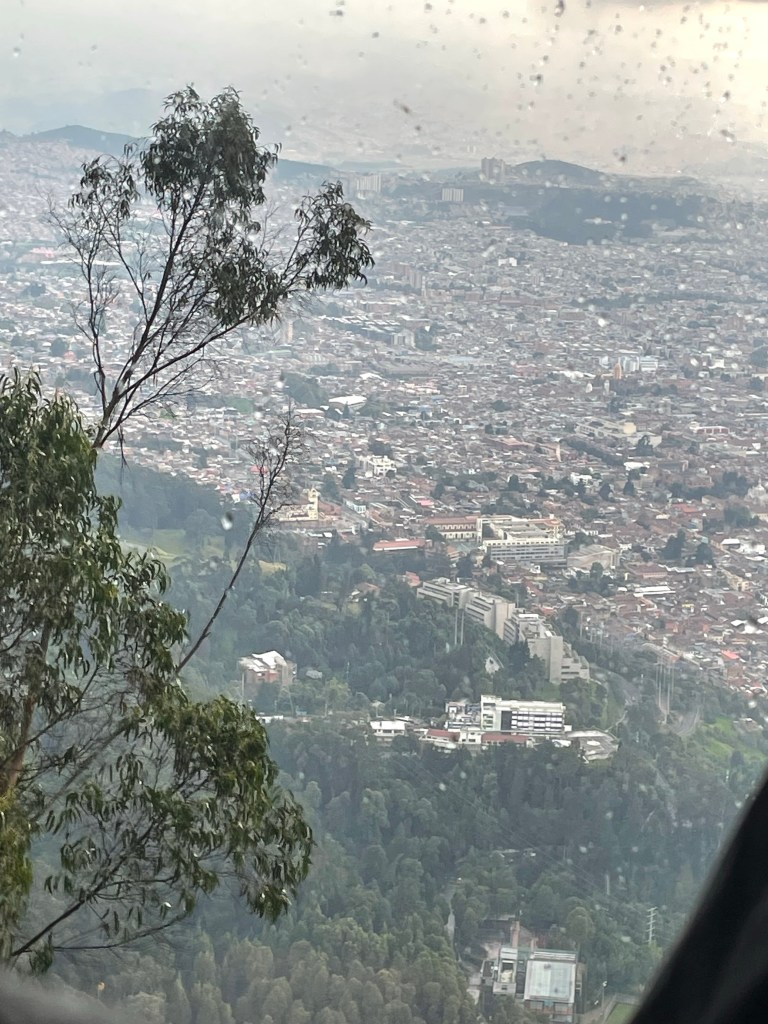
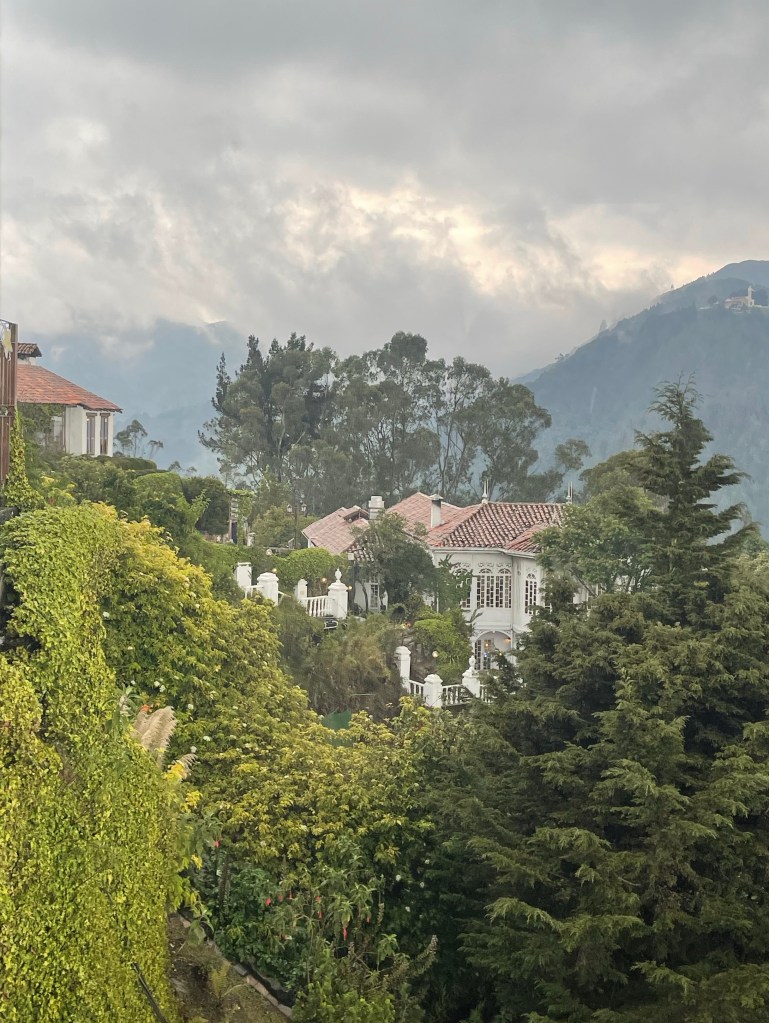
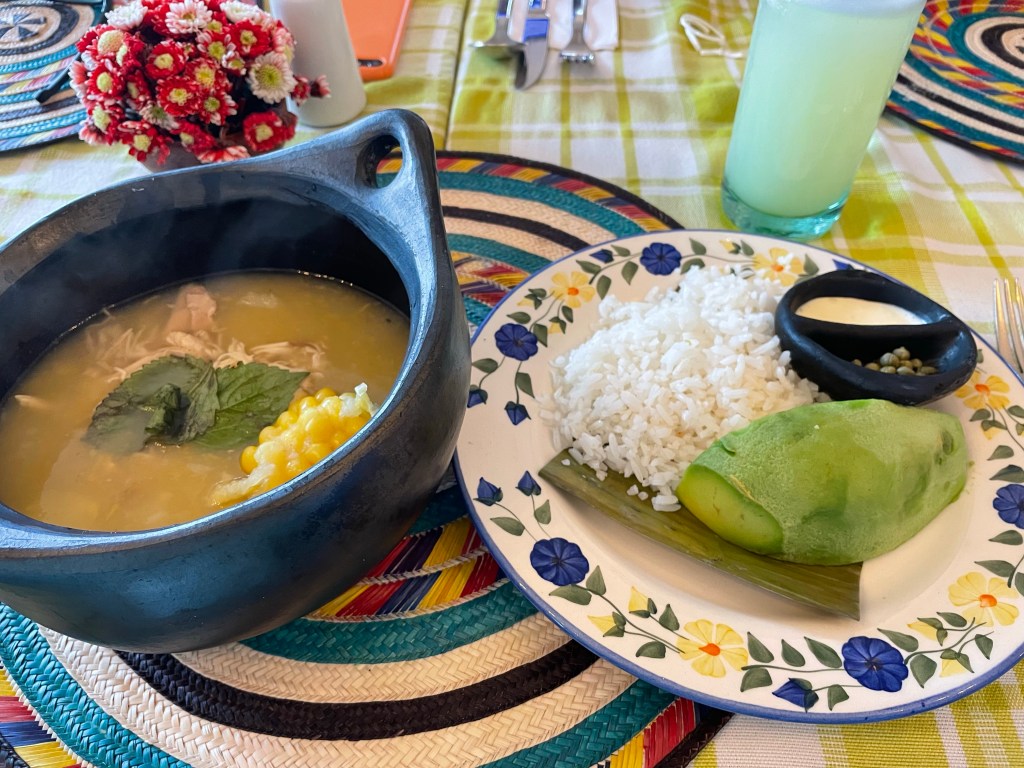
We ended our day with a cable car ride to visit Monserrate – a high mountain of elevation greater than 10,000 feet that dominates above the city center of Bogota. We enjoyed lunch – many of us having the traditional soup – Ajiaco, helping to warm us in the cold, wet weather immersed in clouds. After lunch, we visited the Pasion De Cristo Confortanos church, Built in 1600s, then destroyed by earthquake in 1917, and then it was rebuilt larger and better. We also learned a little about ecology- ecological zones and the importance and value of rain and filtered water for the city.
Throughout our time in Colombia, but especially over the last two days – we have seen first hand many of the realities of the city of Bogotá- past and present. We have met wonderful people and heard personal stories – reminding us of the power of education, empowering others, having a clear vision and the willingness to overcome obstacles big and small – to believe in ourselves and to inspire others for a better future. As class 52 continues on this journey, fellows will remember to never stop dreaming and appreciate the opportunities we are given.
Signing out – Sean, Katey and Danny
 California Agricultural Leadership Program
Leave a comment