
BACANO means top notch, it’s currently a class phrase

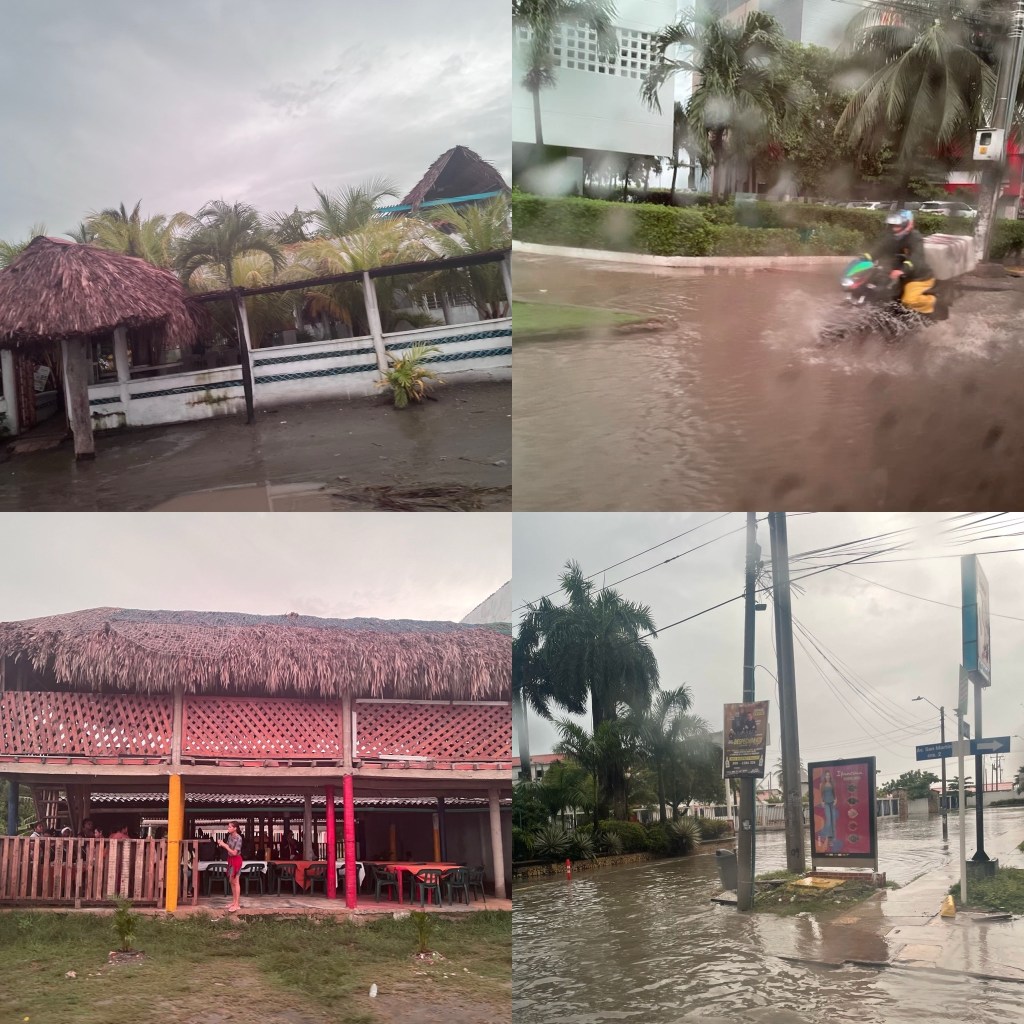
As you will read below, it was almost literally raining cats & dogs. As our events started slightly later than usual to accommodate for the unexpected weather, a group of our fellows took the opportunity to attend Sunday morning mass at a local iglesia (church).
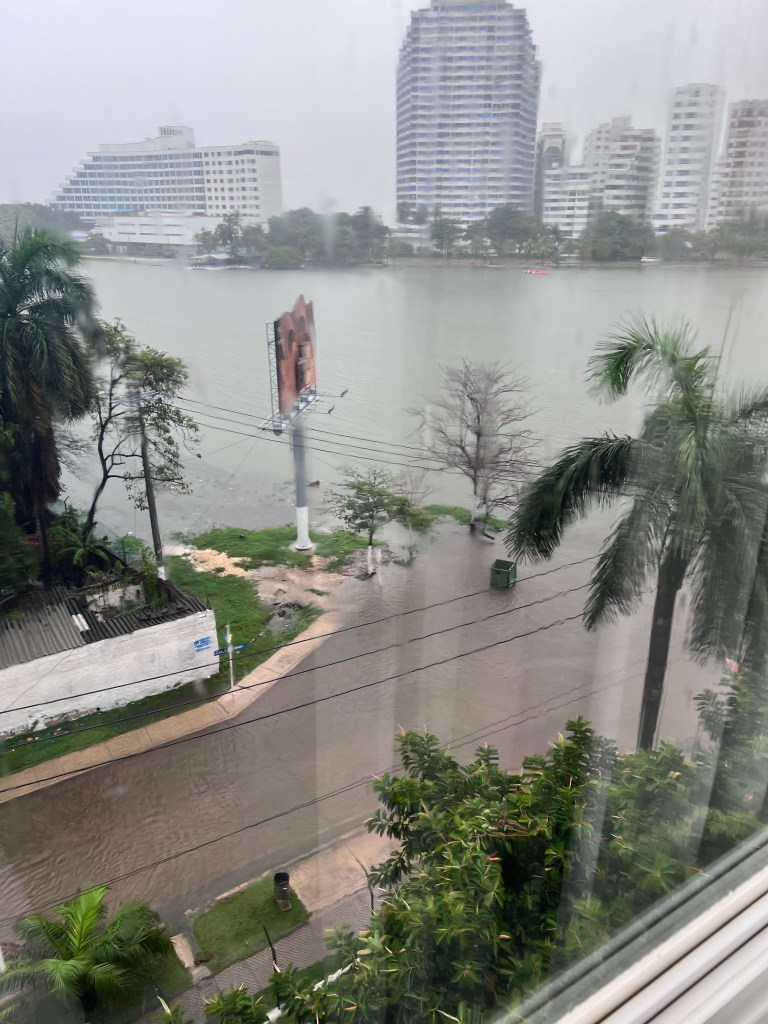
As Class 52 officially started Day 8, our buses/tour guides were able to arrive at our hotel, even with the extreme rain; we wouldn’t let it stand in our way to learn about how important Sunday October 28th, 2023 will be for the Colombian people. It’s ELECTION Day!
The results of todays elections, specifically in Cartagena, have the potential to change the future of the town as they see it now. There are two main candidates running for Mayor of Cartagena. One candidate from a family of the traditional ruling class and a candidate coming from “the people” who appears to understand the struggles and disparities between social classes.
We are staying in the Boca Grande neighborhood of the city, where extreme flooding can be a regular occurrence. This variance in the weather really hinders workers ability to get to their jobs. Thus, the government is working to improve drainage to help with high tides and extreme rainfall. This is an example of how important the current day’s elections might impact the future of Cartagena, as each mayoral candidate has articulated a different vision for the role of government in this crisis.
The social and economic struggles are constant in Cartagena and other surrounding towns. A commonly shared view is that the rich are getting richer, and the lower classes are stuck where they are. Jobs are available, but interviews and availability of jobs are on the basis of “rosca” which means a friend or family member is already working at the business. A individual must be a “rosca” to get the job. The person’s knowledge and skill level are often disregarded entirely. This creates and continues to contribute to the current 25% unemployment rate in Cartagena.
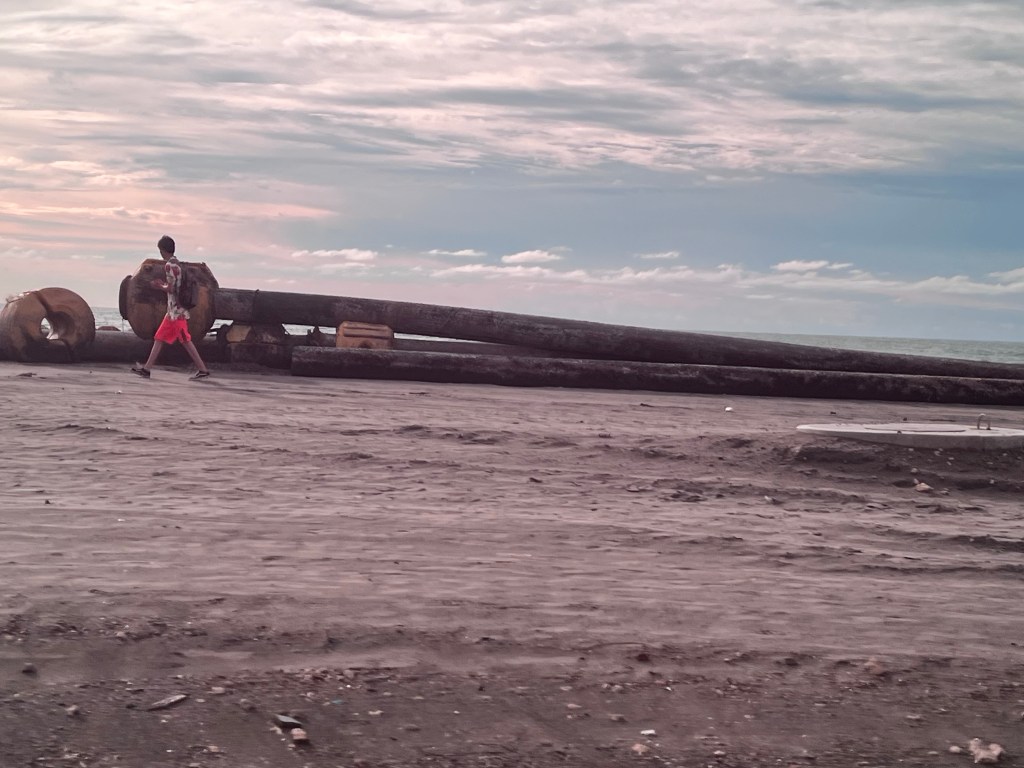
We spent a large portion of the day in the oceanside community of La Boquilla. The drive is usually a short 15 minutes from where we are staying however with the elections and flooding, it took roughly 30 minutes to arrive.
La Boquilla was among the most important slave towns in Cartagena’s region, with the current population being predominately of African descent. La Boquilla is the lowest level of the government’s socio-economic status indicators. However, gentrification is happening in La Boquilla in the form of hotel development, with developers building resorts and buying land that will be ranked as the highest socio-economic status. Extreme mixed feelings come from the above situations.
On a very positive note, there are agreements with these resorts and hotels that they must abide by, with official government laws being passed with the aide of a former U.S. President. Some of these conditions are that a minimum of 20% of their staff must consist of locals. Additionally, the resorts coming to La Boquilla are required to feed the entire community once a month and provide English classes for those interested.
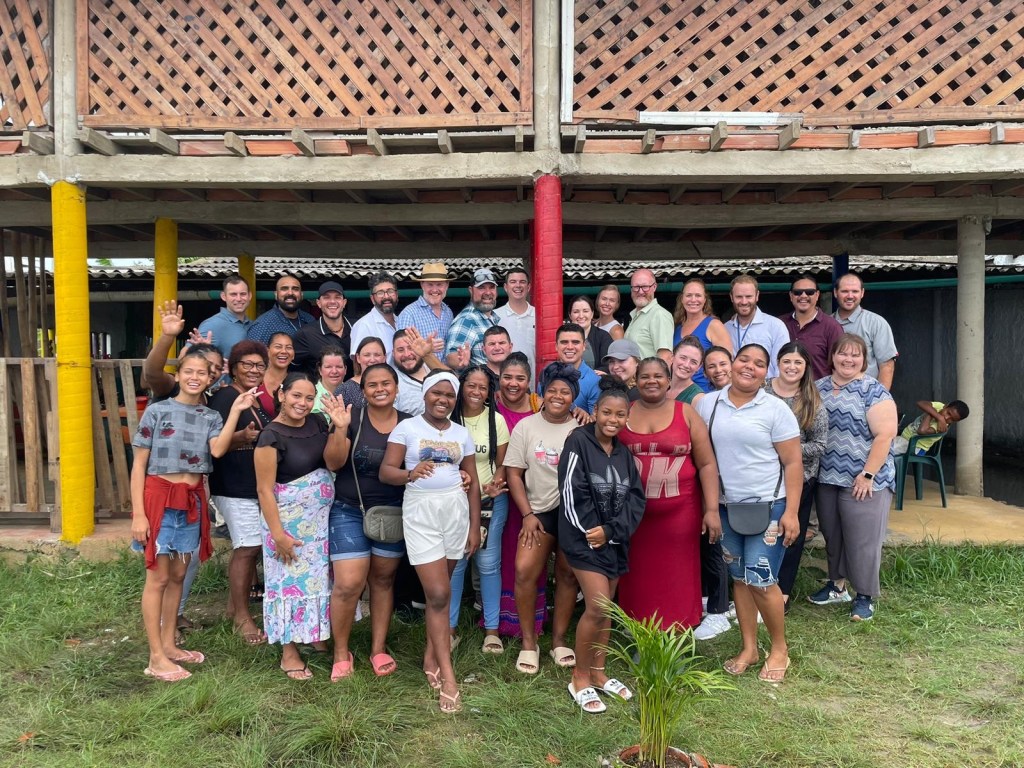
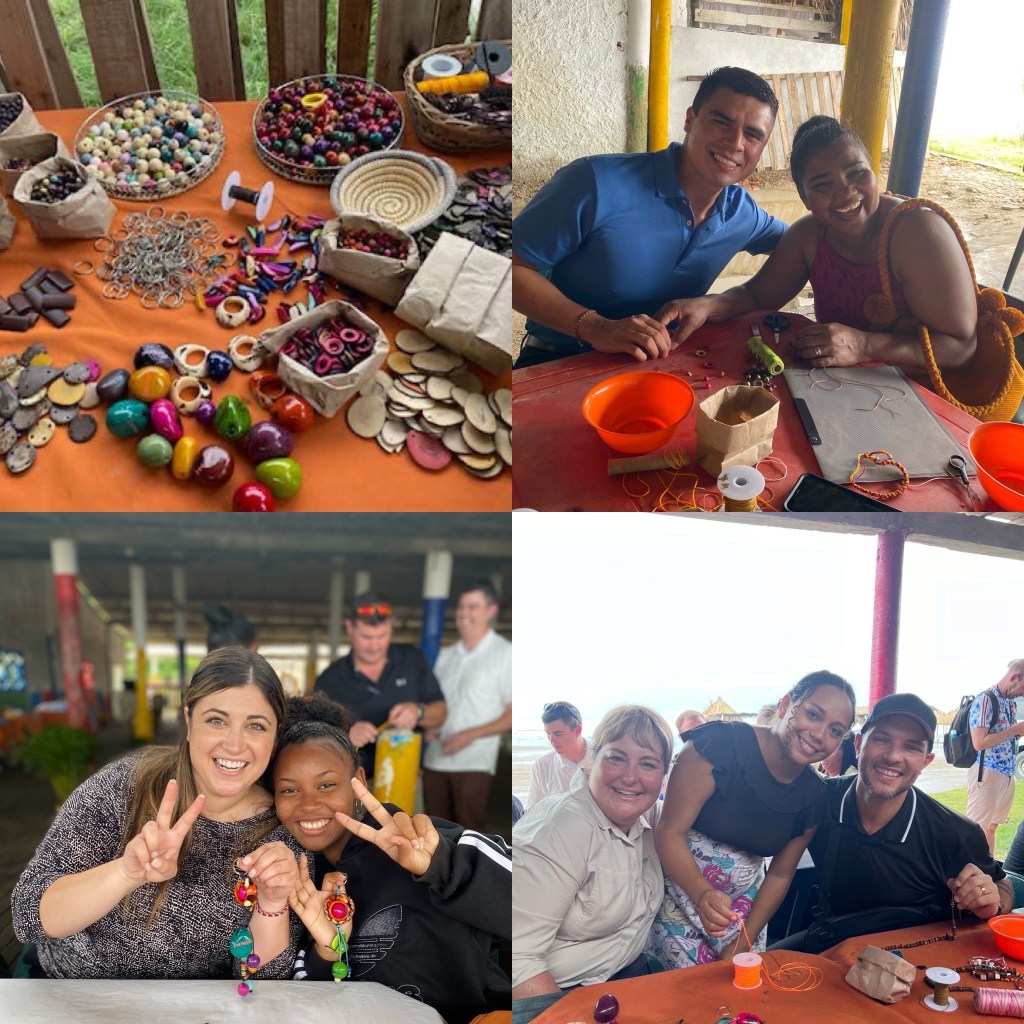
We met with the women of DAMARTES, which stands for Damas (women), and artes (artists), who have established an innovative handicraft market that utilizes recycled materials from their local community. The group was formed after a bad fishing season 10+ years ago and the women of La Boquilla needed to find a new way to help support their families. The people of La Boquilla have very traditional, conservative values still to this day. Women typically stay home with their children to maintain the home and support their husband as the worker and provider. Their personal stories are complex and often heart breaking as many of these brave women shared their stories with us. The entrepreneurial women of DAMARTES took courageous steps to go against the grain. They passionately worked and earned their own money supporting their community.
They proudly told us stories of their first large order. In the first week, they made 2,100 small woven hats. They jokingly told us they finished at 10:00 pm but went to bed and dreamed of hats.
They completed this order in December and officially received payment. Filled with joy, the ladies explained that Christmas came that year to La Boquilla. Many of the ladies were able to buy a washing machines, repaired roofs and their homes, and even buy clothes for their children.

The women of DAMARTES very kindly welcomed us into their world and taught us their craft. Our class has a ways to go in learning how to make jewelry with recycled coconut beads and put them together into a beautiful peice of art as the women of DAMARTES do, but everyone tried their best. We are so grateful to have witnessed the pride, perseverance and spirit of the DAMARTES women.
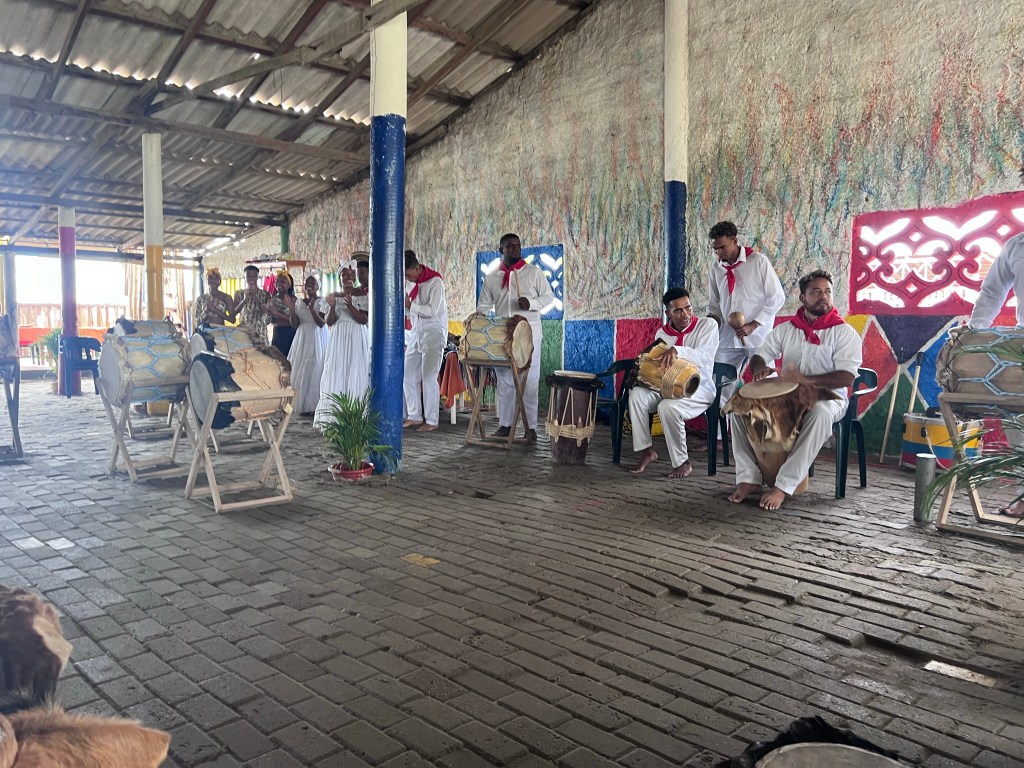
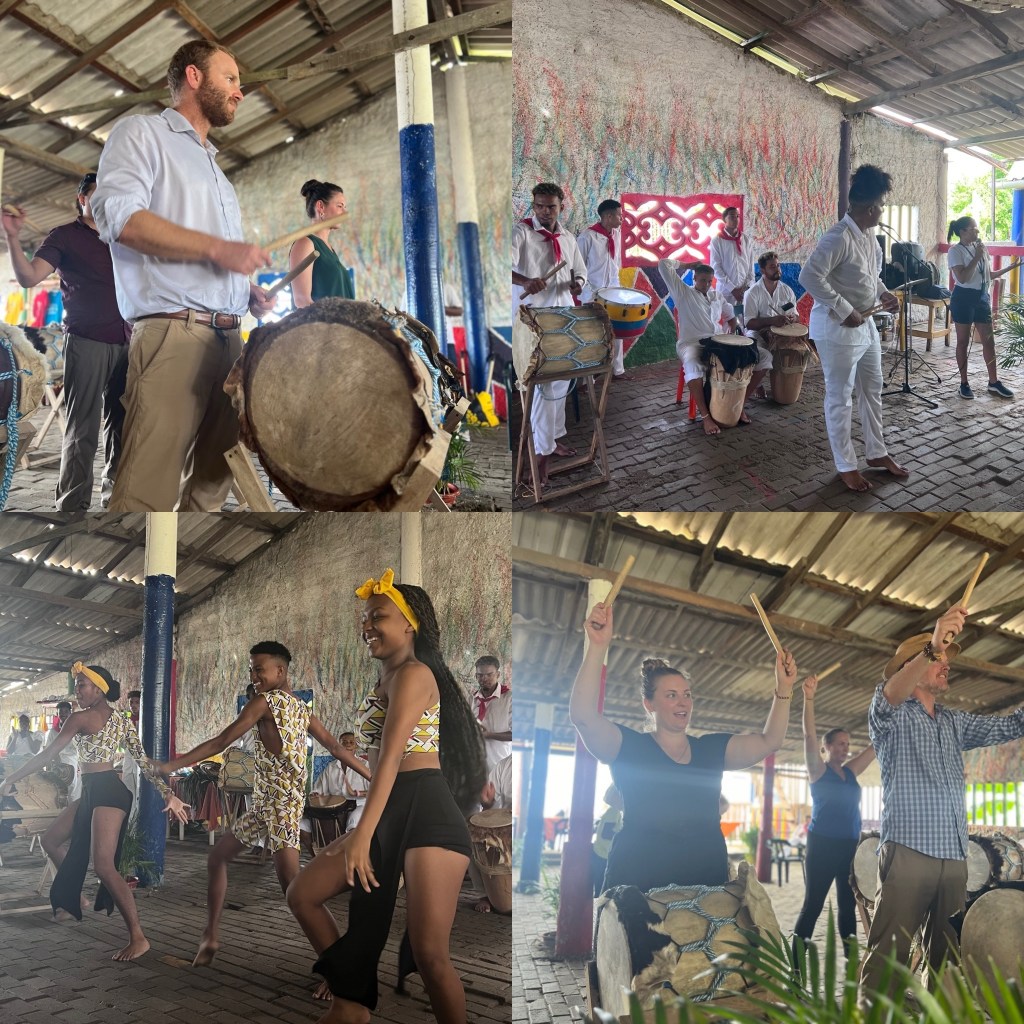
After a refreshing local meal in La Boquilla, we were honored by a group of local youth that brought us the spirit of cumbia, a local music and dance tradition that has taken the world by storm. Traditional cumbia dancing and music were performed for us, but the locals wouldn’t stop there. We rolled up our sleeves and joined the group to learn how to play the drums as well as dance just as our friends had just done for us. One thing that filled our hearts was that the expression of cumbia comes from a word of happiness and joy. It was apparent on not only our guest’s faces but each of every one of our fellows.
We learned a little more of the cumbia as a local group, Kilele Son, taught us about the historical and cultural elements that make up this beautiful, spirit-filled performance. Additionally, the Kilele Son group works in the local community to teach English to youth and provide educational resources.
As we all were able to experience the beautiful music and dancing, the music was described to us often times as a romantic gesture. Many men will give flowers or even jewelry, but cumbia is this through the dance with feelings, emotions, and expressions made through the music and dancing.

Our time in La Boquilla really demonstrated the power of cultural exchange. Both DAMARTES and Kilele Son passionately believe in bettering their community and supporting their families in entrepreneurial ways. They’ve used tourism to extend their reach and teach others about their culture. Through their efforts they’ve given a voice to La Boquilla.
Que Chimba – Amanda, Christopher, Michelle
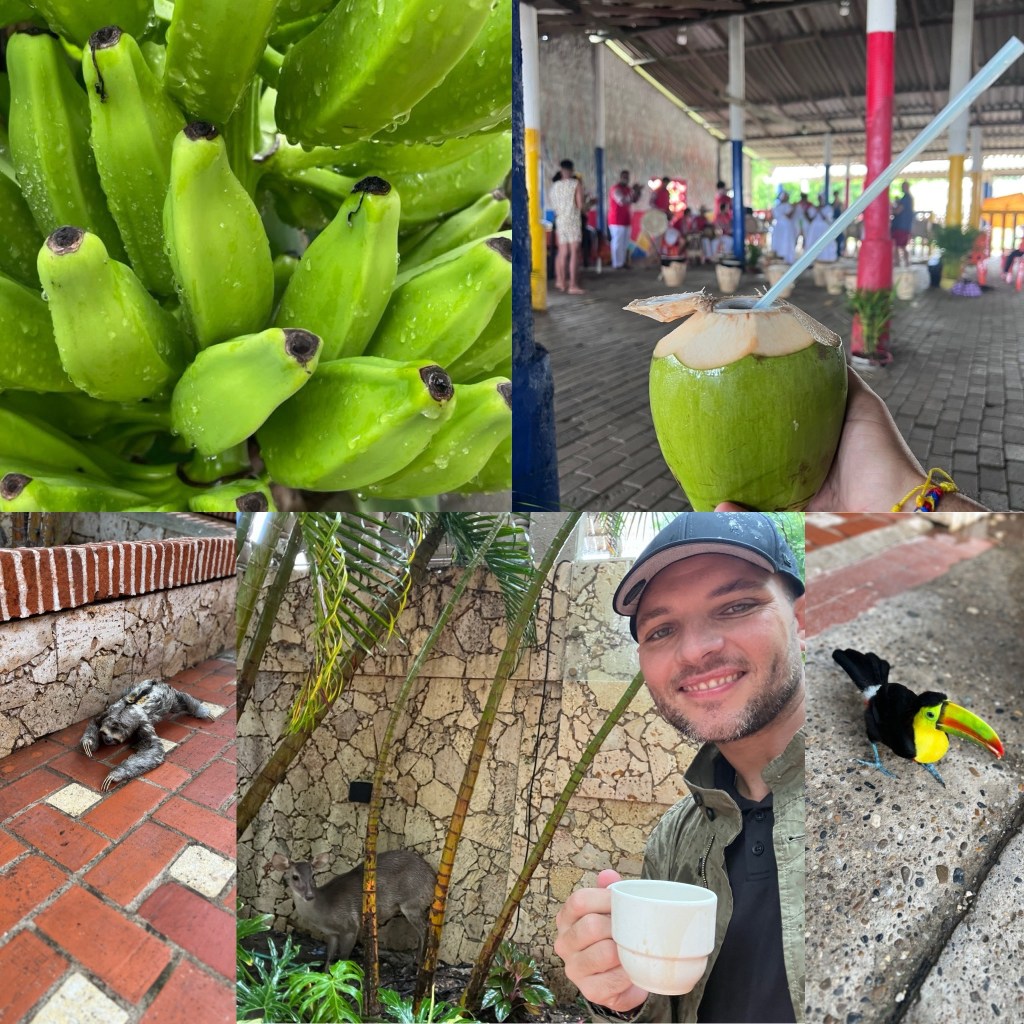
Additional photos of Class 52’s impactful experience on Day 8


 California Agricultural Leadership Program
Leave a reply to Mia Cancel reply